

Yoda famously said “Do or do not. There is no try.”
That same mantra – to fully commit to anything you do, win or lose – could be as much a line from the McGrail Memoirs as it is the Skywalker Saga.
The McGrail family’s protagonist, Mark, is a force to be reckoned with. He’s the name behind some of Rotherham’s most spectacular building renovations, rescuing the likes of the George Wright Hotel off High Street and the old Post Office on Domine Lane.
And just like Luke Skywalker, the reclamation specialist was faced with an intimidating task in his latest project. However, instead of lifting a sunken X-wing fighter out of the swamp, he’s raised one of Rotherham’s most historic cultural venues out of the rubble.
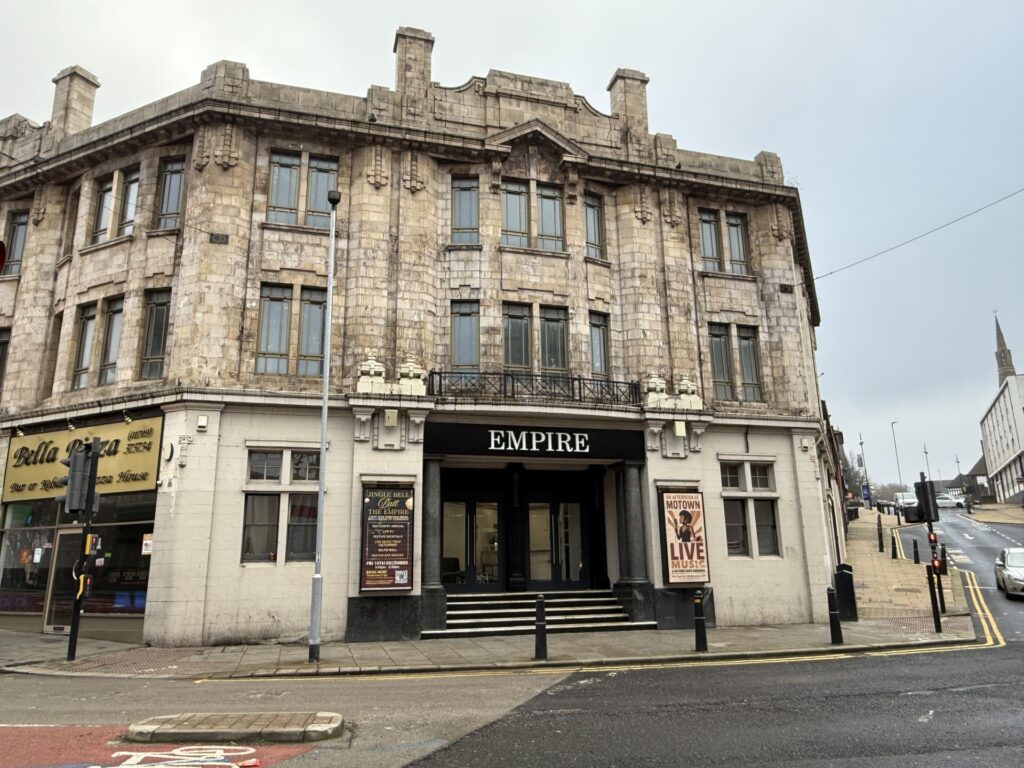
Over a period of 18 months, Mark, his wife Ruth, children Luke and Kirsty, brother-in-law Scott, and their staff have resurrected The Empire Theatre to create a live music venue that Rotherham can be proud of.
Through blood, sweat, and a fair few tears, Mark and eleven members of his team from SME Waste Management and Environmental Services uncovered and restored so many original elements of the building, most of which haven’t been seen for decades.
The Terrazzo mosaic floor in the foyer. The art deco tiled stairway that once led to the circle seats. And the elaborately moulded balcony of the ‘gods’ gallery.
“When we got the keys, we didn’t know any of that existed,” said Mark. “Every time we ripped a wall down, we found something else. People thought these original features had already been cut out and thrown away, so we knew we needed to restore and protect them. They’re part of living history and you can’t build that again.”
The Empire, Essoldo, Classic, Cannon, New York New York, Beach or Pop. Under which name you knew it and used it, whether as a theatre, cinema or nightclub, it’s iconic for every generation and everyone’s got a story to tell.
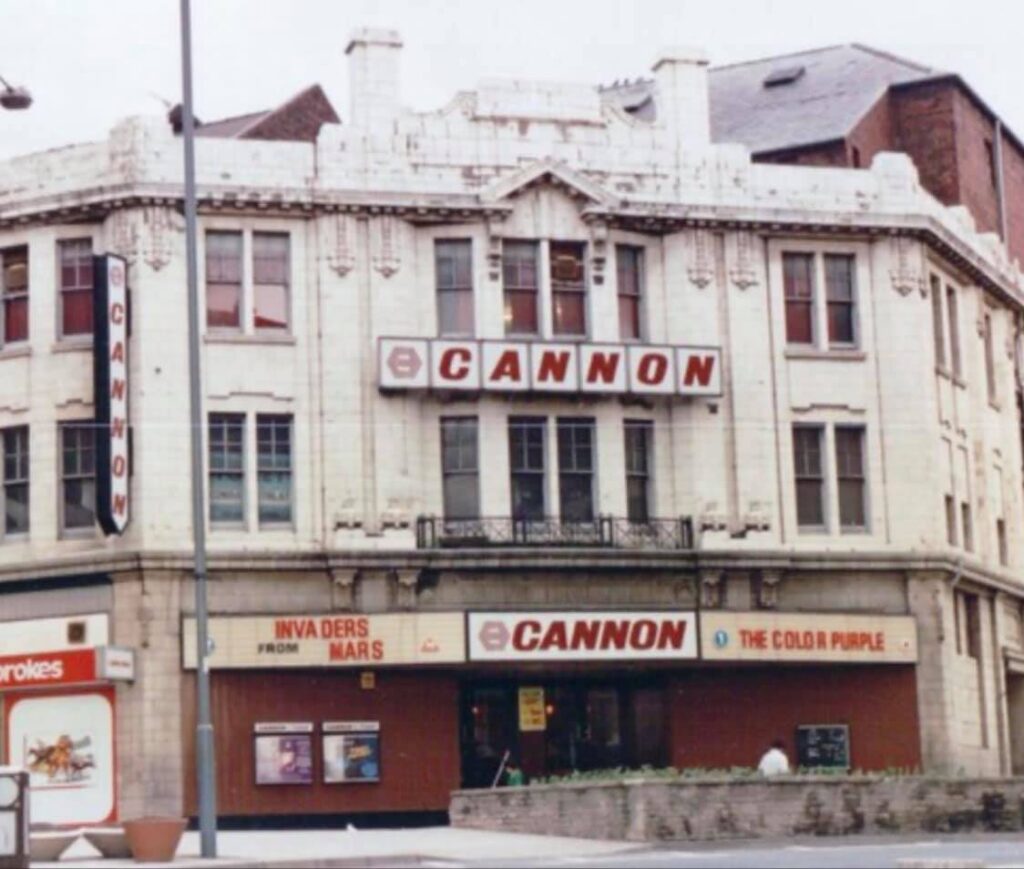
Of Teddy boys in their drainpipe trousers hanging around waiting to watch Rock Around the Clock in 1956 or mods and rockers scrapping in the foyer when Quadrophenia was released in 1979.
Of queuing up Ship Hill in the 1960s waiting to catch a glimpse of Cliff Richard and The Shadows or spending two hours in the line for Grease in 1978 with your black off-shoulder top on.
Of priests stood outside in 1973 warning cinemagoers not to watch the Exorcist or standing on your tiptoes at the box office to sneak into an adults’ only film when you were under 14.
Or being in the crowds in the 1980s to watch cult classics like ET, Raiders of the Lost Ark, Ghostbusters and the Star Wars sequels.
Having been born the year after the cinema closed, my memories of it are as a nightclub. Many a Thursday night was spent with college classmates in Pop for their student nights.
Little did I know of its past life as a cinema, with no indication of the grandeur it once had – and that could hardly be blamed on the sticky Synergy carpets or the £1 drinks blurring your vision. All those beautifully ornate features had simply been covered up with MDF, raised floors and a false ceiling.
Empires have a tendency to crumble, and it’s a shame that parts of this wonderful building had been left to decay. Had it not been for Mark and his family, it could very well have disappeared altogether.
And what a loss that would have been after being such an iconic venue for over 110 years.
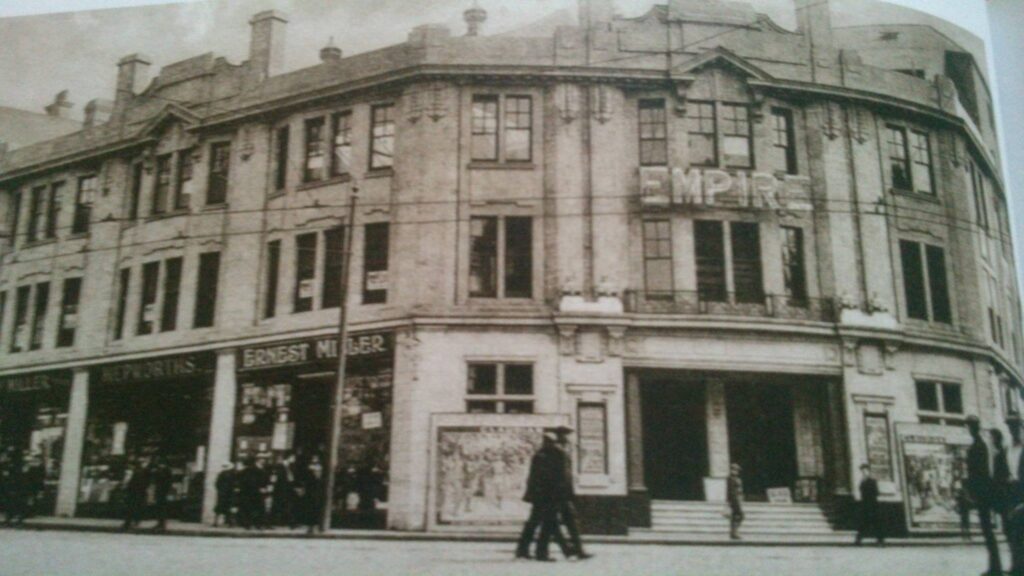
The Empire was first opened in December 1913 as a variety theatre. It formed part of a complex of shops where High Street meets Ship Hill.
William Hafferty, landlord of the Ring O Bells pub on nearby Church Street, went into partnership with Joe Steeples of The Grapes Hotel in Dalton to bring an ornamental theatre building to Rotherham.
They appointed Leeds-based architects Chadwick and Watson to design the building; they’d previously worked on the Hippodrome in the town centre, as well as the Empire Theatre in Dewsbury and the Alhambra Theatre in Bradford.
There was no expense spared, with its white glazed tile frontage, smooth Terrazzo entrance floor, grand tiled stairway, and proscenium arched Italian Renaissance auditorium.
Inside there were luxurious seating and lighting across three floors with four elaborate private boxes. The total build cost around £40,000 – about £4million in today’s money.
Initially there was just one huge screen, with the capacity to seat 1,500 people across the stalls, circle and balcony levels. Standard tickets cost between 3d and 6d or you could pay a shilling for the slightly more comfortable dress circle seats – but the working-class mostly sat on the benches way up in the gods.
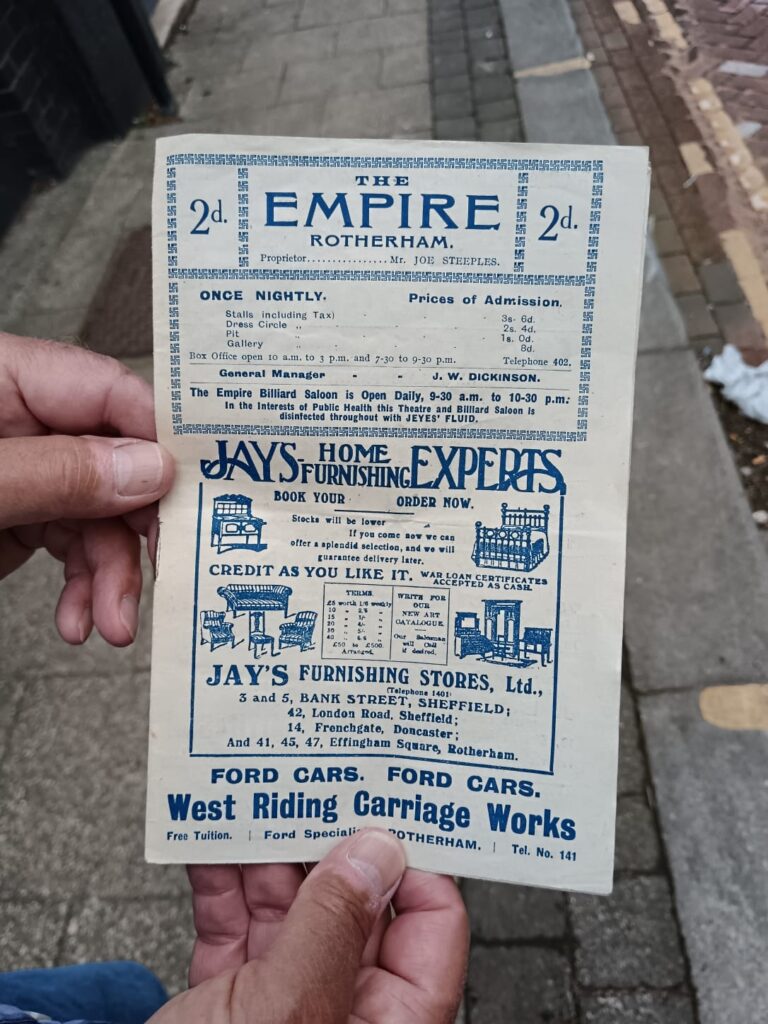
Guests could watch twice-nightly variety shows with comedies, musicals, revues and pantos accompanied by an orchestra.
In 1921, the auditorium was altered for full-time cinema use and it became the Empire Super Kinema. Over the next 90 years, it had a number of different names and owners, with modernisations happening across the decades.
From 1929 to 1930 it was leased to ABC Cinemas who installed sound projection. It was then sold to Rotherham District Cinemas Ltd, before being bought by the Essoldo chain in 1954 who installed CinemaScope for widescreen films.
During this period, Terry Steeples was manager and he’d greet guests in his dinner jacket and bow tie. Terry was the nephew of original owner Joe – Terry’s father Alfred took over the cinema on the death of his brother in 1928.
In the early ‘70s it passed to the Classic cinema chain who closed off the circle and balcony to convert the stalls area into a modern cinema, reducing the capacity to around 500 seats. A second screen was then opened in the gallery, adding another 300 seats. The circle tier was left as a void to house the ventilation system.
Cannon were the final operators in the 1980s until the cinema closed in 1990.
After that, part of the building became a nightclub which had various names over the years – New York New York, Beach, Blue Bamboo, Synergy, Pop and Amber Lounge. The tiled corridor was sealed off and the grand mosaic entrance was covered with a raised false floor.
The old stage area had already been turned into a snooker club in the 1970s. Laurie Steeples, son of the Empire’s original owner Joe, was a world champion billiards player who won back-to-back English Amateur Championships in 1929 and 1930 and went to Sydney in 1931.
In 2024, with nightclub traffic slowing down and the building falling into disrepair, Mark bought the building from its previous owner with a view of seeing where another reno project would take him.
But with the state it was in, it wouldn’t be anywhere fast!
One of the first jobs was shifting 22 tonnes of beer waste – over 350 kegs – that had accumulated in a back room from previous tenants. Every time an operator moved out, they left barrels of beer and locked the door.
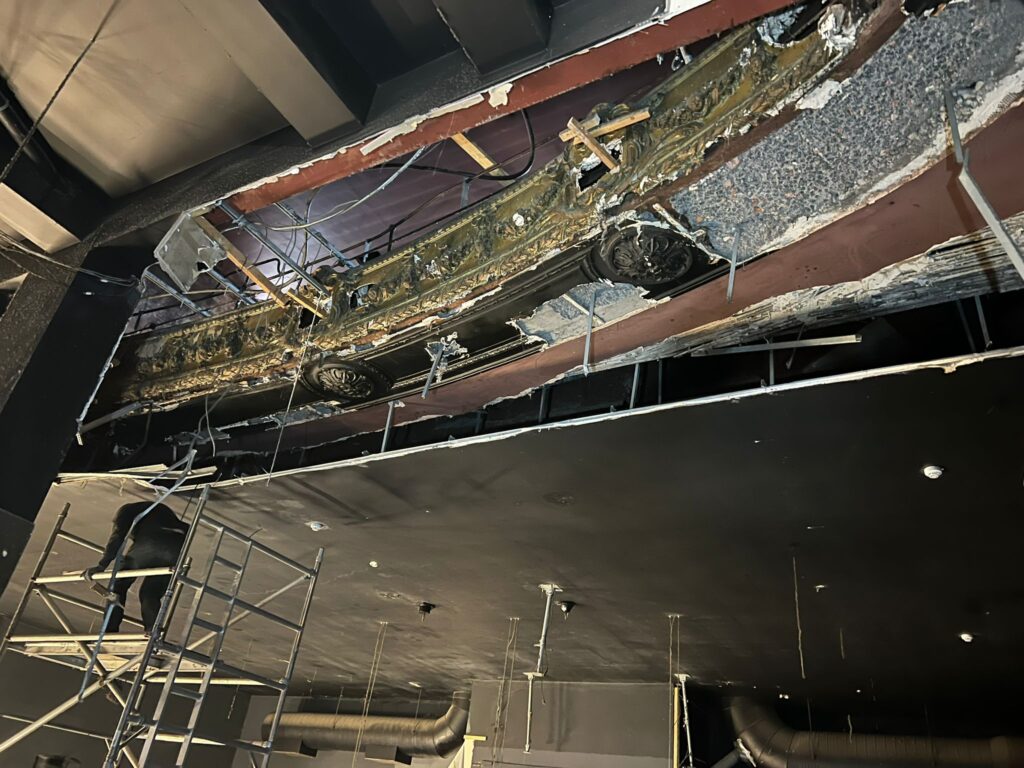
Then work began on stripping back all that dark MDF cladding, stud walls and suspended ceiling to see what lie beneath.
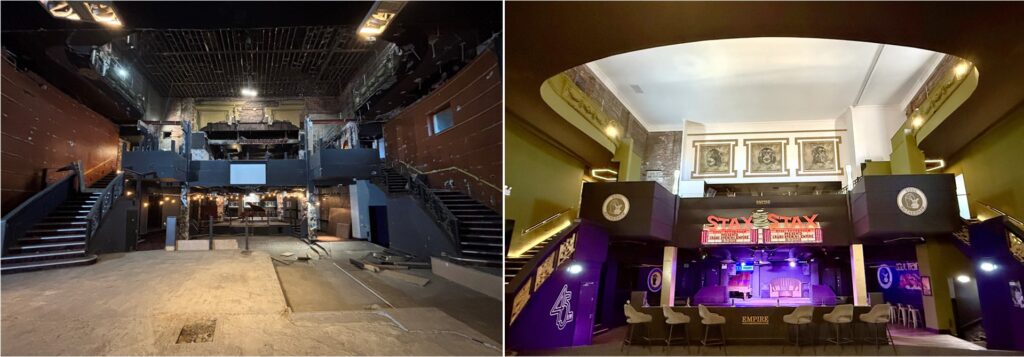
Mark, originally from Sheffield, couldn’t believe what was hidden away – particularly the original balcony that had probably not been seen in over 30 years. The old planks of wood that would have had seats or benches attached to it had been removed, but there were still steel girders and iron brackets, and it had been taken over by a flock of pigeons.
Much of the decorative moulding was intact but Mark’s team have done a tremendous job of intricately restoring the missing parts to match.
The interior has been tastefully painted in a heritage green with black and gold trim, adding warmth and personality to the space.
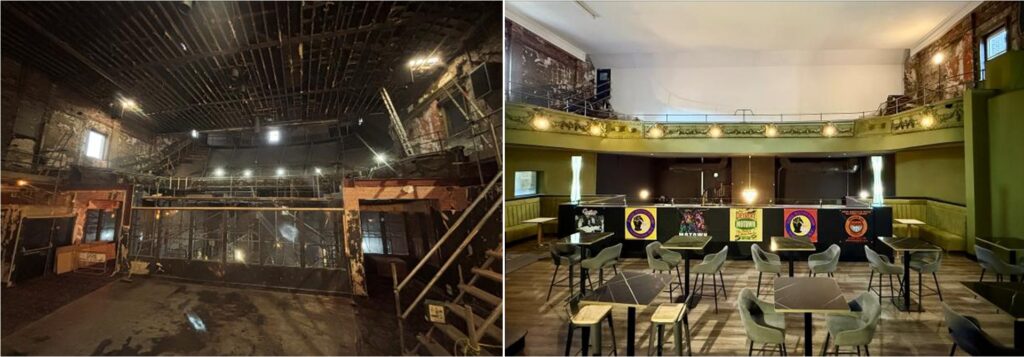
Up on the mezzanine floor, the stud wall and windows have been removed to open up the space, with new booth seating installed in the alcoves. The stairs carpet, some may be pleased to know, is still the same Synergy one with its pink logo (but no longer sticky!) and the upstairs bar is now the Oh Bar in a nod to the HooHa bar of old.
The old smoking area, what was one of the original entrances off Moorgate Street, has had its metal gates replaced with new glass doors. Mark hopes this could become a secret garden-style VIP area in future.
The main entrance has been brought back to its original state, taking away that sacrilegious raised floor and wooden ticket booth to reveal the stunning mosaic Terrazzo floor that’s had a professional clean.
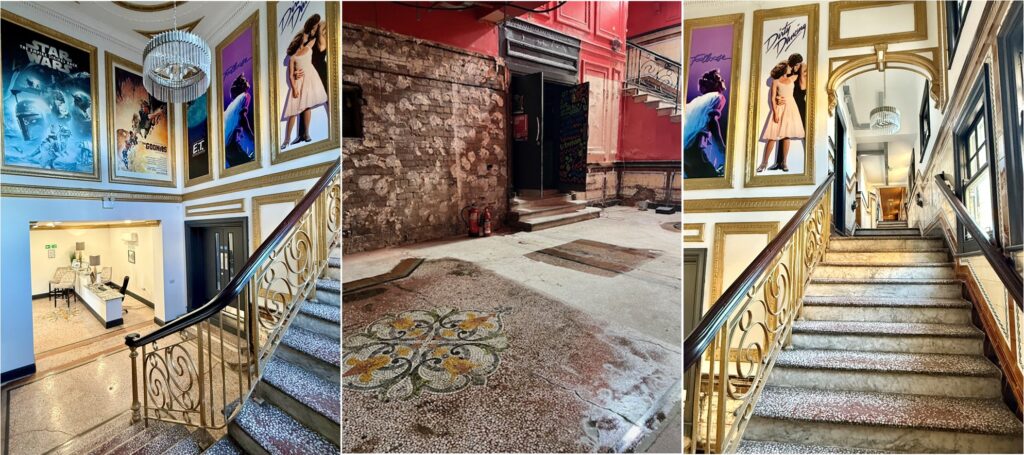
The art décor walkway that many a cinema-goer would have walked along to get to their seats is now in full view once again with its amazing tiles and marble steps from the 1920s.
And the McGrails have done all this and more out of their own pocket, with no additional financial support or investment.
“It was a huge gamble for us as a family and we’ve had 18 months of sleepless nights laid awake worrying if we’d get it finished. Since we’ve been sharing the work on social media, we’ve had so much positive feedback and people are in awe of the work that’s been done.”
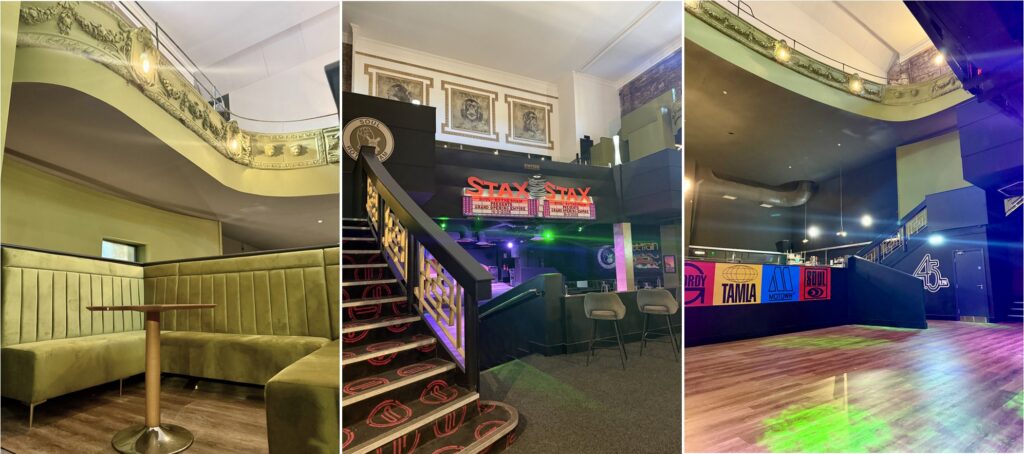
The gamble paid off, with a sell-out launch event in November for Soul Rotherham. Over 700 people piled into the newly restored Empire, including legendary soul and Motown DJs Norman Jay and Russ Winstanley.
In December, there were events across a range of music genres, from piano house with Whiston producer Shak Jackson to a jingle bell ball with country folk band The Flippants.
With capacity for 1,300 people, this goal now is to get the right operator in place to move the events schedule forward in 2026.
Mark’s plan is for The Empire to be more of an early bar music venue that boosts the daytime economy in Rotherham – and that when doors shut at 9pm revellers can then go and patronise the nearby late-night venues in the town.
“We need to capitalise on the good it’s achieved so far. My phone hasn’t stopped ringing with people who are interested but we also have to be cautious in who we hand it over to.”
But one thing’s for sure: The Empire is finally striking back.
Find out more about what’s happening at www.empiretheatre.co.uk or follow them on social media.

