Lions are not usually spotted roaming through Barnsley, gathering in Rotherham town centre or basking in the sunshine in Sheffield’s parks.
But this summer, a pride unlike any Yorkshire has seen before has taken over the region as hundreds of beautifully decorated lions and cubs arrive for the Pride of Yorkshire sculpture trail.
The major public art trail has been organised by Sheffield Children’s Hospital Charity to celebrate the 150th anniversary of the Sheffield Children’s NHS Foundation Trust and the extraordinary impact it has had on generations of families since opening its doors in 1876.
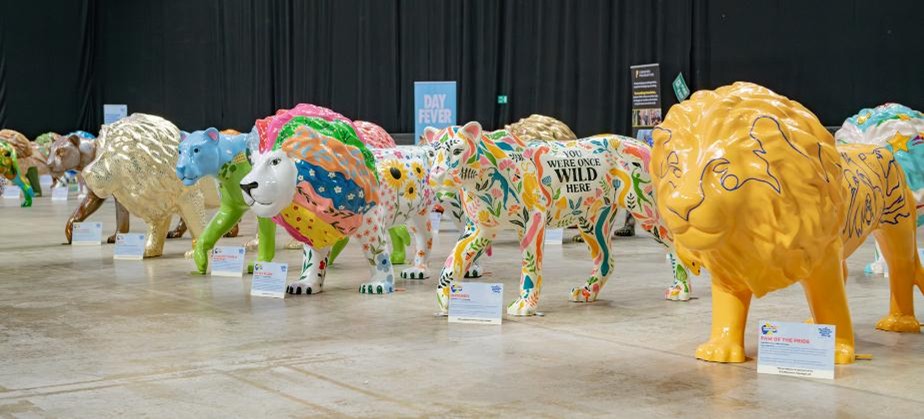
Armed with a trail map, children, families and adults alike can track down 150 large, colourful lion and lioness sculptures alongside 150 cubs hidden across South Yorkshire.
Each one has been designed to celebrate something that makes our region special, whether that’s music, sport, cultural heritage, landscapes or communities.
From Puck the Sheffield Steelers themed lion to Astro Leo in honour of Sheffield cosmonaut Helen Sharman and The Lion off the Estate for Rotherham band The Reytons, each lion has its own mane character energy.

Artists, schools, community groups and businesses have played a role in bringing the sculptures to life. More than 75 artists have been involved, with designs by the likes of Pete McKee, Amadora, Lydia Monks and Adam Briscoe.
On until September, the trail offers families the chance to turn ordinary summer outings into exciting expeditions.
Whether you’re spending a day in Barnsley, enjoying a weekend in Rotherham or exploring Sheffield city centre, there will be plenty of opportunities to spot another member of the pride.
You can access a free interactive trail map online or pick up a physical copy at many outlets across South Yorkshire to tick off as many of 300 sculptures as you can.
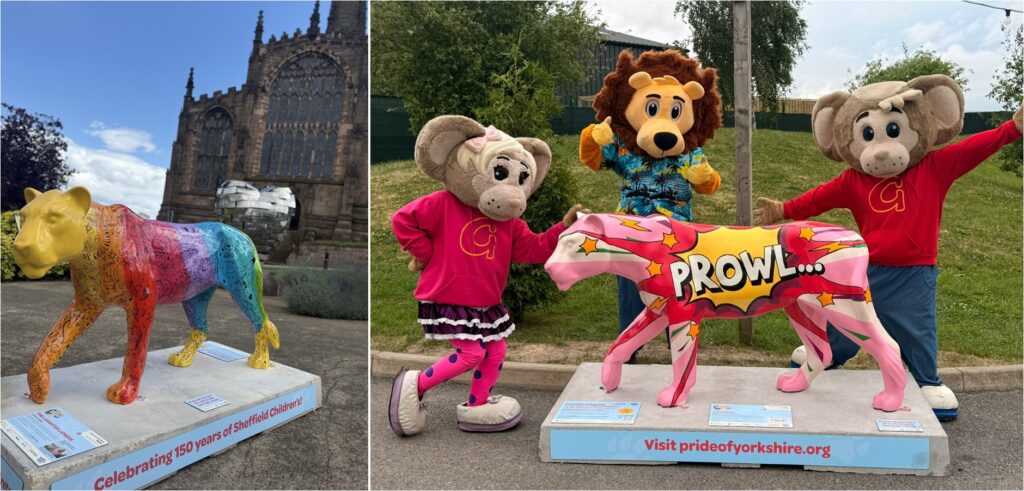
In Rotherham, the lions and cubs are at places like Gulliver’s Valley, Boston Castle, Clifton Park, Magna, Wentworth Woodhouse and various places around the town centre.
Over in Barnsley, you can spot them at Elsecar Park, Locke Parke, Monk Bretton, RSPB Old Moor, the town centre as well as the other principal towns like Hoyland, Wombwell, Goldthorpe, Cudworth and Penistone.
While in Doncaster, you can find the sculptures at places like Doncaster Racecourse, Lakeside Outlet, the Corn Exchange, Wool Market, Frenchgate and Yorkshire Wildlife Park.
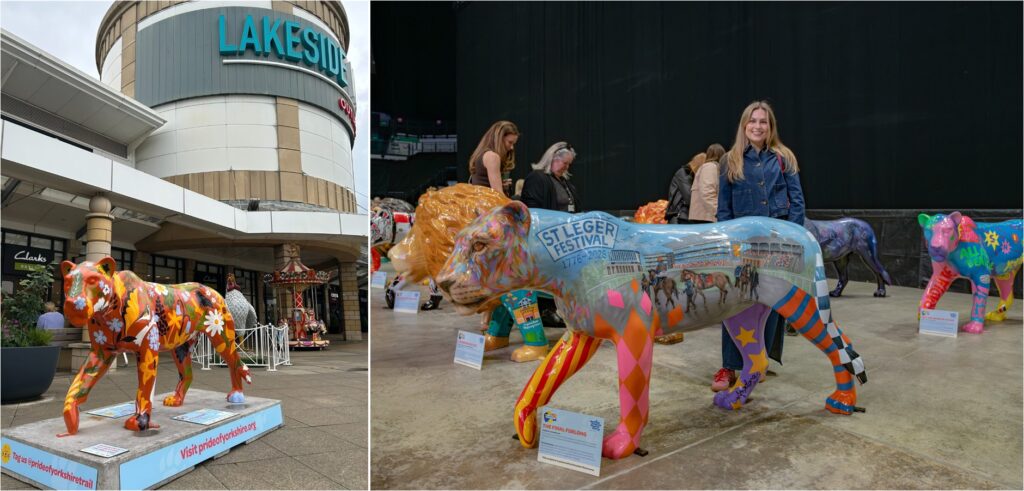
And there are plenty of places in Sheffield to go lion spotting – whether that’s Meadowhall, the city centre, Kelham Island, Hillsborough, Crystal Peaks or Endcliffe Park.
It’s a chance to stretch little legs, discover hidden gems across the region and enjoy some free family fun. But it is also an opportunity to celebrate an organisation that has spent a century and a half caring for Yorkshire’s children.
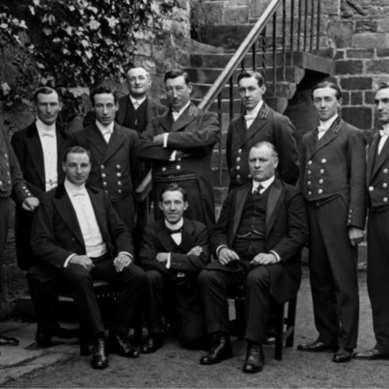
When Sheffield Children’s Hospital was born in November 1876, it was one of only a handful of hospitals in the country dedicated exclusively to treating children.
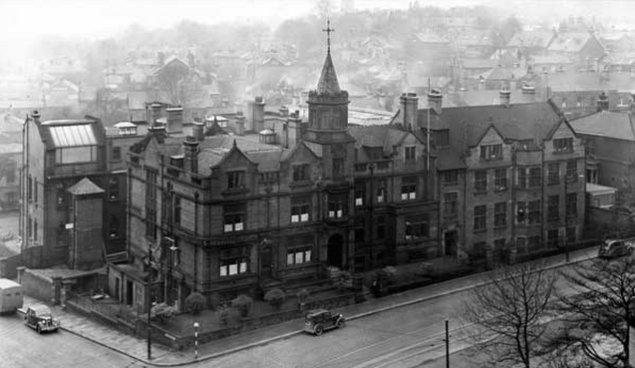
Founded by architect John Dodsley Webster, surgeon Dr William Cleaver and solicitor Henry Vickers, the Sheffield Free Hospital for Sick Children started life as a small number of beds in a house on Brook Hill, near what is now the University of Sheffield roundabout.
Though small in size, it had a big ambition: to give children access to specialist healthcare close to home.
In its first year, the children’s hospital had 29 inpatient admissions. However, as demand for services grew, the hospital soon moved up the road into a pair of semi-detached houses at its current site of Clarkson Street.
This too became inadequate and so it was decided that a new purpose-built facility be established. The construction of a new hospital started in the mid-1890s and the building was officially opened in 1903.

Over the coming years, facilities were continually upgraded. The first x-ray machine and lighting were installed in 1907, electric radiators and an operating theatre were added in the 1920s, along with two additional wards which increased the in-patient capacity to 85 beds.
The outpatient department was extended, the operating theatre improved, and an electronic lift added, before a 14-bed baby ward was built in the 1930s.
In 1948 the hospital became part of the NHS and with that came more improvements. A second operating theatre was created in the 1950s followed by the emergency department in 1977.
Over the decades, the hospital has grown to become a national leader in specialist children’s healthcare. The Sheffield Children’s NHS Foundation Trust is one of only three dedicated children’s hospital trusts in the UK and it has the only children’s Major Trauma Centre for South Yorkshire and North Lincolnshire.
Whether it’s day-to-day worries, complex conditions or life-saving interventions, Sheffield Children’s cares for hundreds of thousands of children and young people every year from across South Yorkshire and beyond.
From Embrace, their specialist children’s transport service based in Barnsley, to doctors supporting wards in Doncaster, Rotherham and Barnsley, and health visitors working in communities across Sheffield, care is brought closer to home wherever possible.
In many ways, the lions are a perfect symbol for the hospital and its patients. They represent courage, strength and resilience – qualities demonstrated every day by the young people receiving treatment, the families standing beside them and the staff dedicated to their care.
While the hospital marks its 150th anniversary, 2026 also celebrates another significant milestone: 50 years of Sheffield Children’s Hospital Charity.
The charity was established in 1976 and has spent the last five decades helping fund projects that go above and beyond what NHS budgets alone can provide.
Its impact can be found in every corner of the hospital.

Charitable donations have helped provide specialist scanners, advanced surgical technology and groundbreaking research facilities into the prevention and cure of childhood illnesses. There is now an action lab for lung function testing, a fluoroscopy system, hydrotherapy pool, bone density scanner, vitamin D analyser and baby patient simulator.
The charity has also funded projects designed to improve the experience of patients and families, recognising that healthcare is about much more than medicine alone. From playgrounds and entertainment systems to family accommodation and its innovative Art+ programme, public donations have made an enormous difference to families during what can be some of the most challenging periods of their lives.
Building on the success of previous sculpture trails including Herd of Sheffield and Bears of Sheffield, the Pride of Yorkshire trail is set to be the charity’s most ambitious adventure yet.
They hope to raise £2.8 million which will go towards the £20 million renovation of the hospital’s emergency department.
The emergency department currently treats over 62,000 children and young people every year, almost two-thirds more than the intended capacity of 24,000 patients from when it was built in the 1970s. The redevelopment works aim to create a calmer, more child-friendly and fit-for-purpose environment with improved patient flow, privacy and family experience.
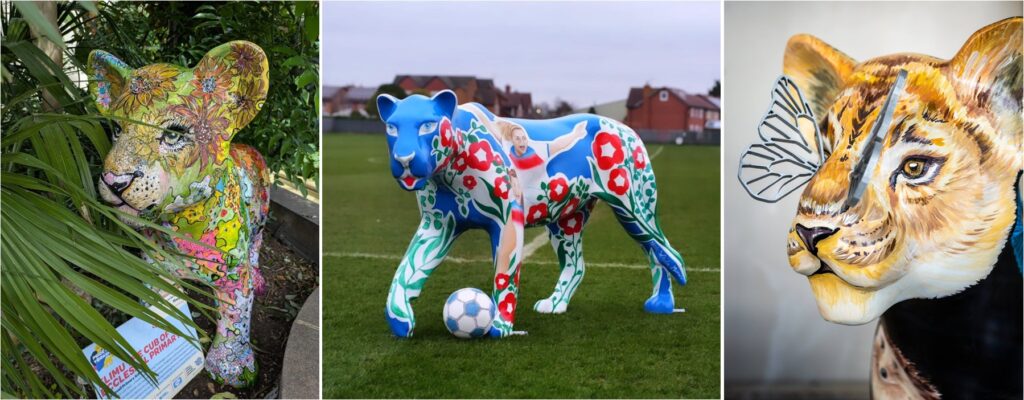
At the end of the trail in September, many of the sculptures will be auctioned to raise funds for the charity. The public can also donate money or purchase merchandise, such as their football jerseys, cuddly toys and paint your own lion kits.
You can find out more about the Pride of Lions, how to access the free trail, and ways to donate by visiting prideofyorkshire.org.