
How many people can say they got a planet for Christmas?
Rotherham’s Peter Jałowiczor can.
On Christmas Eve 2009, while most people were wrapping presents or preparing for the festivities ahead, the amateur astronomer was sitting at his computer in his Masborough home searching for worlds beyond our solar system.
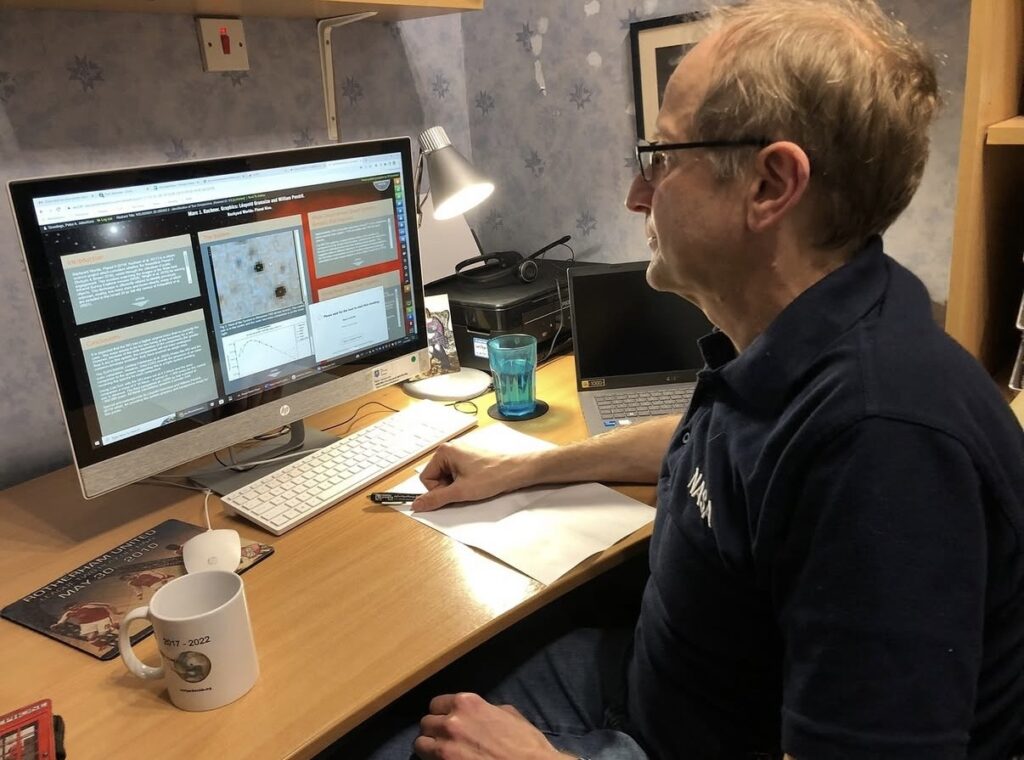
That afternoon, while his wife Bogusia was busy peeling veg in the kitchen and their young daughter Kasia was downstairs excited for Father Christmas’s arrival, Peter made a remarkable discovery: his first exoplanet, a planet orbiting a distant star hundreds of light years from Earth.
Remarkably, he made the discovery without owning a telescope, having a PhD or being employed in a research post. Instead, the hobby astronomer, then in his 40s, had spent endless hours painstakingly analysing publicly available NASA data.
It was a breakthrough that would eventually be followed by three more exoplanet and 25 brown dwarfs discoveries, leading to a nine-year involvement as a contributor to the NASA-led Backyard Worlds: Planet 9 project to expand humanity’s understanding of the universe.
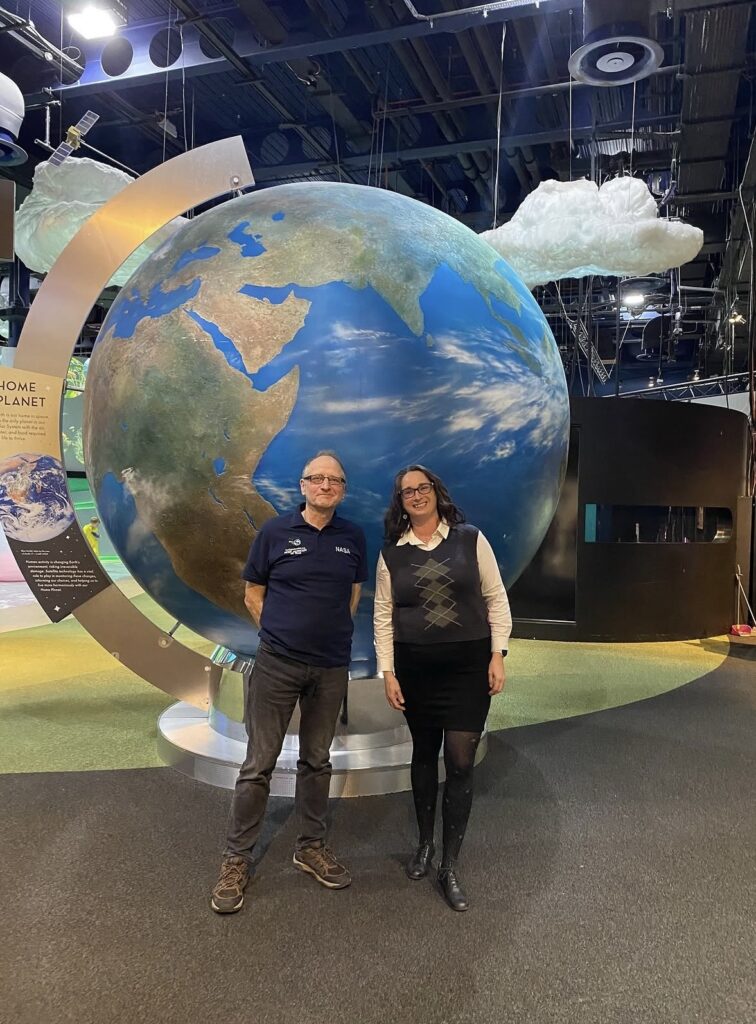
Peter’s contributions recently earned him an invitation to New York to speak at the project’s conference at the American Museum of Natural History, where professional astronomers and citizen scientists gathered to celebrate discoveries made far beyond the walls of traditional academia.
Few people can say they have discovered a new world. Fewer still have done so from a home computer while balancing a career outside science.
But his achievements prove that exploration is no longer limited to observatories perched on mountaintops.
The son of a Polish army veteran that settled in Britain after the Second World War, Peter developed a fascination with science from an early age.
Born in Rotherham in 1965, he grew up in the Space Age when astronauts, the Moon landings and planetary exploration captured imaginations around the world.
But long before he discovered planets orbiting distant stars, life had already taught him how quickly worlds can change. At six years old, he lost his father, Antoni, a leading figure in the local Polish community, who died from a stroke aged 56.
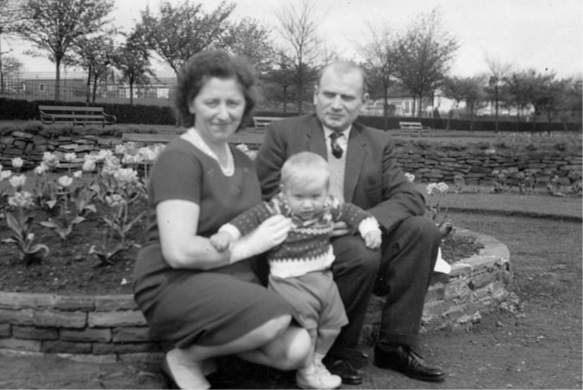
Antoni came to England in 1947 after the war, making his home in Rotherham where he found work in the coal mines. He was involved in organising things in the Miner’s Hostel in the 1950s which was situated near the Mushroom garage off Herringthorpe Valley Road and was home to other displaced Polish veterans.
Antoni bought a house on Station Road in Masborough in 1955 and, when the hostel was demolished to make way for a new housing estate, he moved some of the veterans into his home.
In 1964, his wife Maria came over to Rotherham from their village of Istebna in Poland and they went on to have their only child, Peter when Antoni was 50 and Maria 40 – they married and started a family later due to the war.
The age difference often left Peter feeling as though he belonged to a different generation from his father.
“He should really have been my grandfather,” he says.
The loss of his father created a void as vast as space itself, not only for Peter and his mother but also the Polish community.
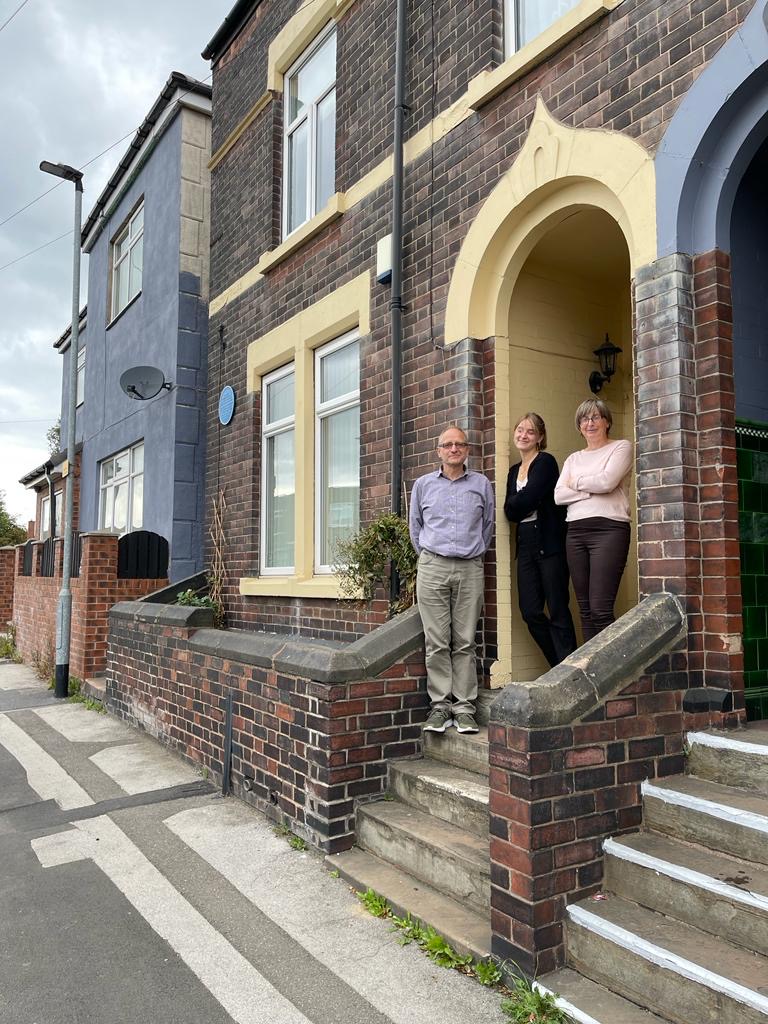
Maria inherited the remnants of the hostel, with two Polish veterans living upstairs that she would often cook for. Before Maria arrived, the house was like a drop-in centre where people would bring food and have a catch up before going to the nearby shops or dance hall. However, this changed as she wanted more of a family home.
“My mother had a hard life but she was very strong and firm. The Polish community would often say she was a woman you wouldn’t mess about with.”
Much of Peter’s childhood was spent watching Star Trek and Carl Sagan’s Cosmos or reading science books he’d borrowed from the library. To escape from the realities of everyday life, his imagination drifted among the planets and he developed a fascination with the night sky that would stay with him for the rest of his life.
“Planets of the solar system became my obsession. Books in the 1960s and ‘70s would tell you how much you would weigh on the Moon or Mars but not on an asteroid. So I started fiddling around with parameters to develop my own equations and work out the answer myself,” says Peter.
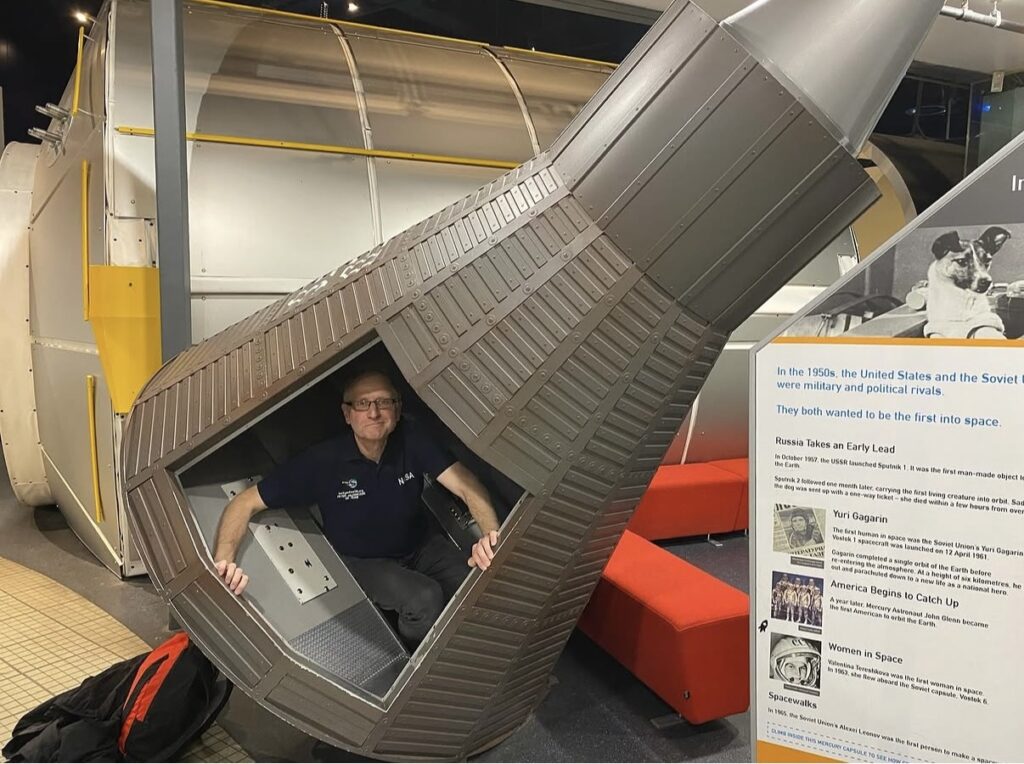
Some years later, while studying maths, physics and chemistry at A Level, he realised the equation he developed as a ten-year-old lad was Isacc Newton’s Law of Universal Gravitation.
All throughout school, first St Bede’s infant and junior school and then St Bernard’s Catholic High School, Peter had the ambition to be a scientist.
After leaving school he did his A levels at Rotherham College’s old Howard Building where he won a student of the year award for his academic achievements. He then went on to study a degree in physics at the University of Sheffield, with the aim of being an astrophysicist.
But tragedy struck during his final year when his mother died from cancer and the course of his life was suddenly knocked off orbit.
“She kept her illness from me so that I could finish my studies. I was so focused on the end result that I didn’t really engage with other students and I had it too cosy really. When she died, I had the rug pulled from under me.”
At 23, and with no siblings or close relatives in England, Peter found himself organising a funeral in Poland alongside looking after the two war veterans that still lived in their family home.
Both had their own mental health problems and Maria had been like a parental figure in their lives. Suddenly, Peter became responsible for these two men – Leo Majewski who was in his mid-60s and Stan Hasiuk who was in his 70s
“I could barely cook for myself let alone provide for them. One of them had a drink problem so some days I’d be studying in my room and I’d hear him fall down the stairs. It had a massive impact on my health and I crashed to a third-class degree.”
The future Peter had imagined vanished like a star slipping beyond the horizon. A class three degree wasn’t high enough to progress onto a doctorate which, in the 1980s, was a mandatory gateway to becoming an astrophysicist.
To help him, the department established a postgraduate diploma in Astrophysical Sciences where Peter graduated with a first, but this still wasn’t enough for him to progress to the PhD.
Unsure of his next steps, Peter decided to set out on a different journey, tracing a path back to his parents’ origins.
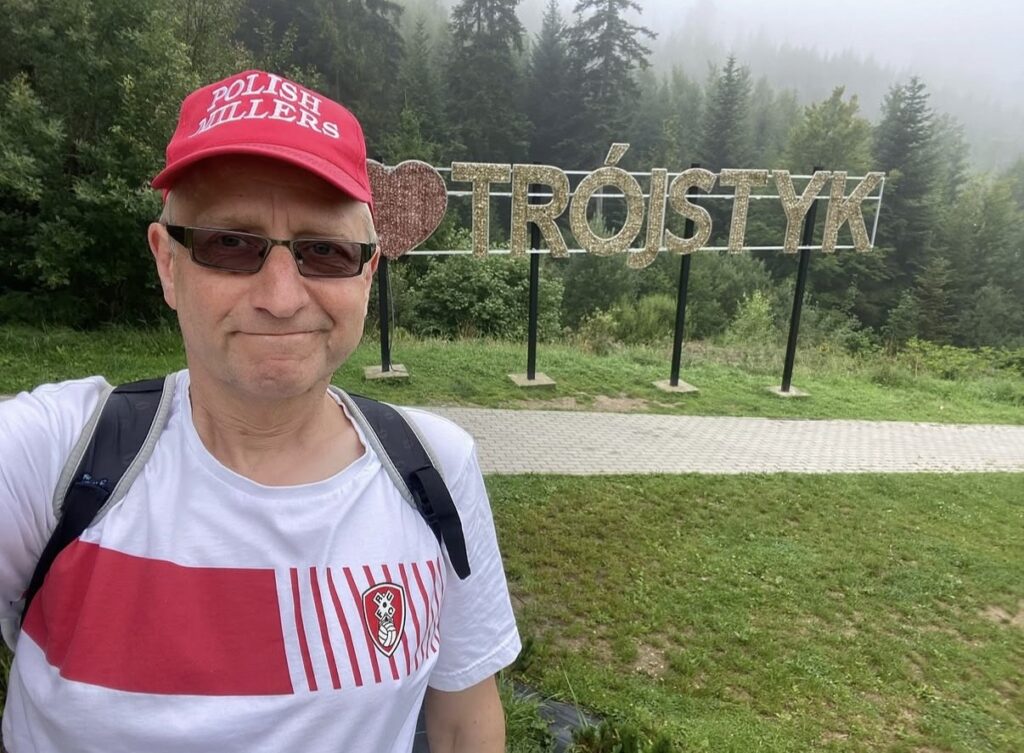
In the early ‘90s, he left Rotherham behind and moved to the traditional mountain village of Istebna in southern Poland. But his hometown was never far from his thoughts – or his actions.
Missing his Saturdays at Millmoor Stadium, the Rotherham United fan founded his own amateur football club called KP Trojwies Millers in 1996, named after the Threevills (or three villages) community where Peter’s father and two of their earlier lodgers at Station Road came from. The team played in the Millers’ strip and their games were often reported in Rotherham United’s programmes.
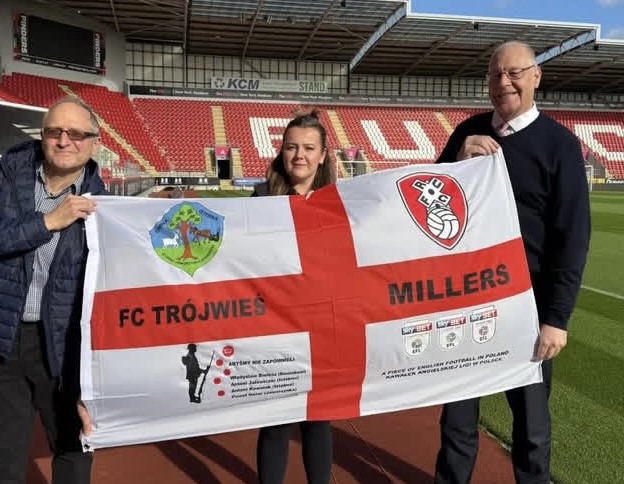
The club was originally made up of a blend of retired players and youngsters. They only ever played games away as they had no home ground, but they gave the local opposition a pasting.
Afraid to lose what he’d established, Peter decided to officially register the club in the Polish football league’s basement division in 1997 where they went on to win all but two matches, often scoring into double figures.
Peter then set out getting them a proper home ground.
“This was a village where football had only ever been a kick-about on a slab of concrete in the forest. There were no pitches, so I managed to get the council to build two proper pitches.”
In 2006 for the tenth anniversary, the non-league side played a friendly against KS Ruch Chorzow, former European Cup finalists and fourteen-times Polish champions. In attendance were representatives from Rotherham United and Rotherham Council, who watched the amateur players hold their own against an international pedigree team to draw 3-3.
“The Polish Millers were winning up until three minutes to go. I told the lads to play for their careers and I’ll never forget the amount of energy they put in.”
The club eventually became a feeder club for Gornik Zabrze, one of Poland’s most successful clubs and the Millers name was sadly lost in the transfer.
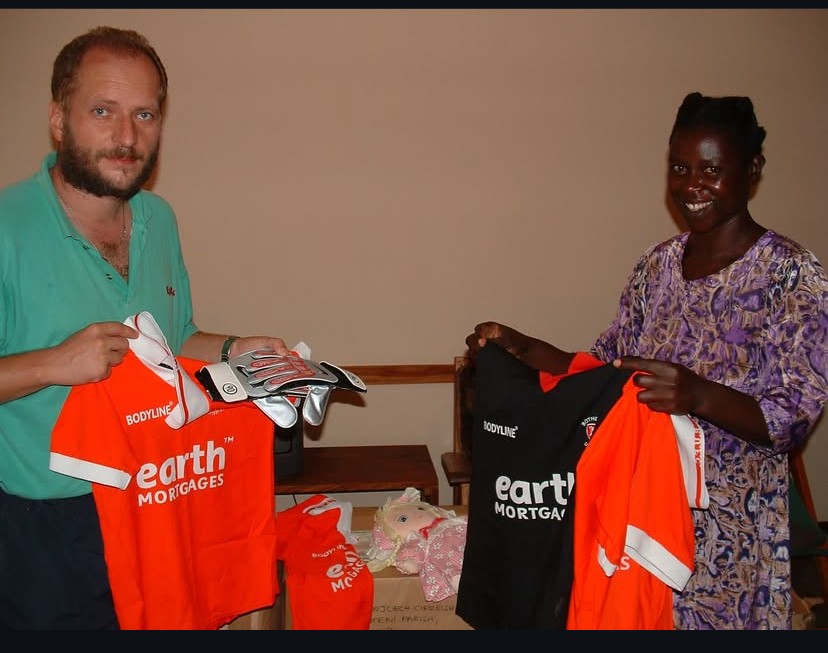
Peter continued his work in football through the Millers Trust where he fundraised and, with the Trust, sent over 300 shirts to Zambian orphanages.
While in Poland, Peter met and married his wife Bogusia who was from the same village as his parents. Coincidentally, her grandmother had been in the same class at school as Peter’s father.
Eventually, with his house in Rotherham to sort out, Peter returned to England with his wife where he built a career in quality control in the utilities industry while continuing to pursue astronomy in his spare time.
It is during this time he found his first exoplanet – HD 177830c – on Christmas Eve 2009.
Working from NASA data, Peter examined light curves, or doppler curves — graphs that show how a star’s brightness changes over time. He also used a technique called radial velocity which detects periodic shifts in the star’s light spectrum, indicating its movement towards or away from Earth and suggests the presence of a planet.
The analysis took a couple of years, with Peter spending a few hours after work each night to discover these planets orbiting distant Sun-like stars in our galaxy.
What began as a solitary pursuit at home gradually became something more collaborative. Through NASA’s Backyard Worlds: Planet 9 project, Peter now works alongside professional astronomers, joining weekly online meetings with Caltech scientists and over ten institutions in the US and UK. They then meet fortnightly to discuss findings and review new data.
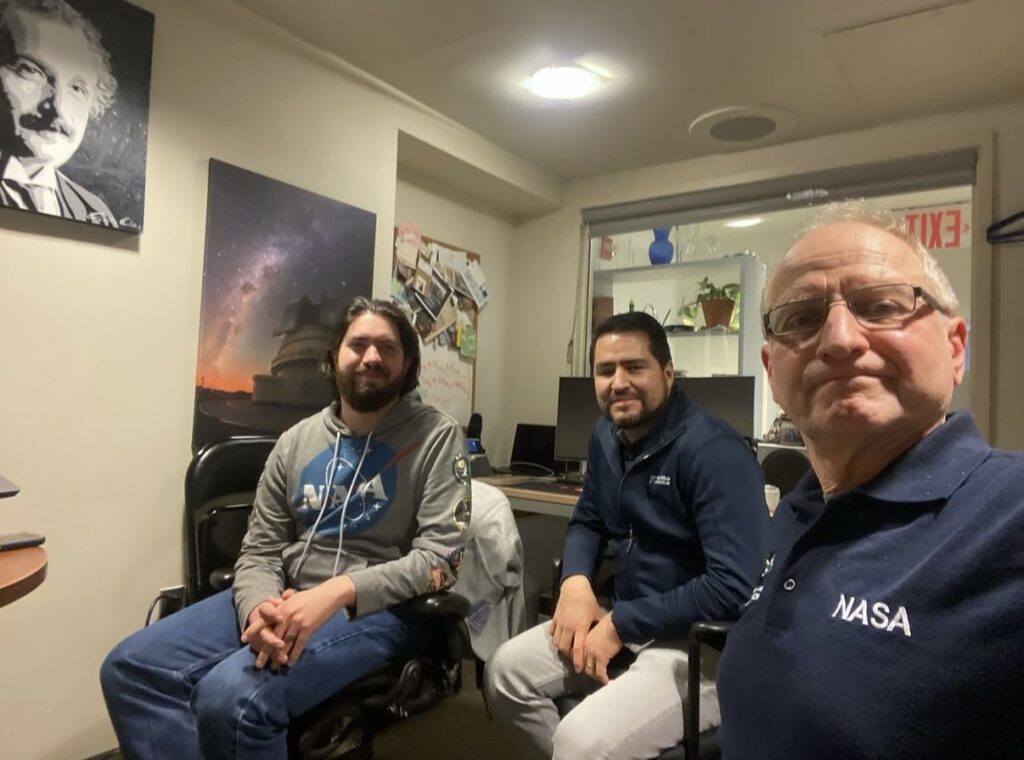
Earlier this year, he was invited to New York to give a talk at the American Museum of Natural History’s astrophysics department. After years of virtual meetings, Peter finally got to see his fellow volunteers and professional astronomers who he’s been collaborating with since 2017.
“That is one of my proudest achievements because I was treated as an equal. I have made an amazing community of friends from around the world. I also took some Rotherham United memorabilia with me for the New York connection and presented the astrophysics’ department’s associate curator, Dr Jackie Faherty, with a signed Millers’ shirt.”
But astronomy is not his only pastime. Just as he would sift through NASA data in search of faraway worlds, Peter found himself searching through fragments of the past, too.
A cache of his late father’s belongings, discovered in 2010, opened a window onto a remarkable wartime story that he felt compelled to preserve.
Antoni had written an autobiography before he died which revealed more about a man Peter had barely known. His father had endured Nazi interrogation during the war and ended up in a prisoner of war camp in 1940 before being sent to France for four years of forced labour. Antoni faced a horrific ordeal, with no footwear, very little food, and only a blanket to keep warm.
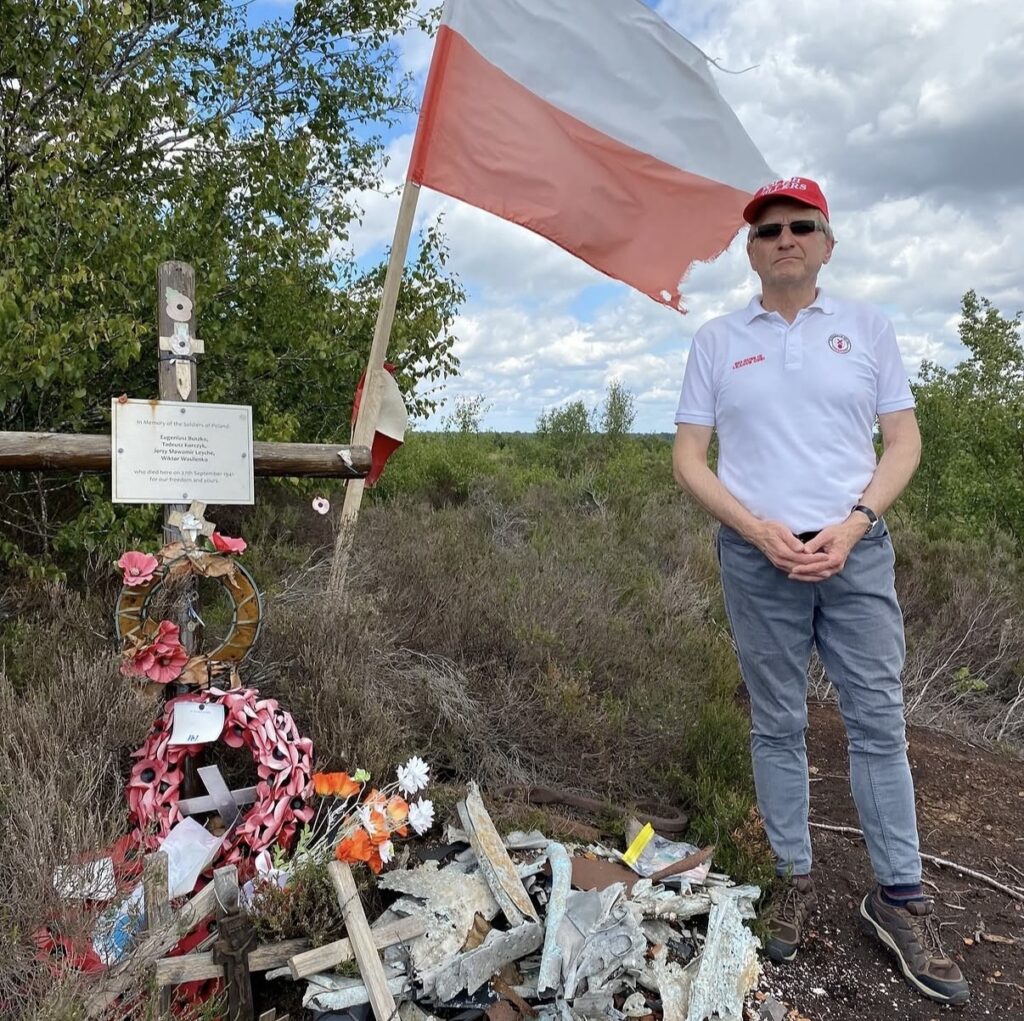
Then, under British command, he ended up in Italy before coming to England in 1947.
Peter went round other Polish families to see if their experiences were similar and from his research he wrote a book detailing the lives of 15 Polish veterans. A second updated book was released in 2020 with 49 stories of war veterans.
“I never had an interest in war stories as a child as I thought the Polish veterans I grew up around were just grumpy old men. As an adult, I had a new perspective and could understand why they were with what they had endured.
“The Polish generals in particular were treated very badly as the British government refused to honour their pensions so they were forced to do menial jobs. It created a lot of resentment at the time.”
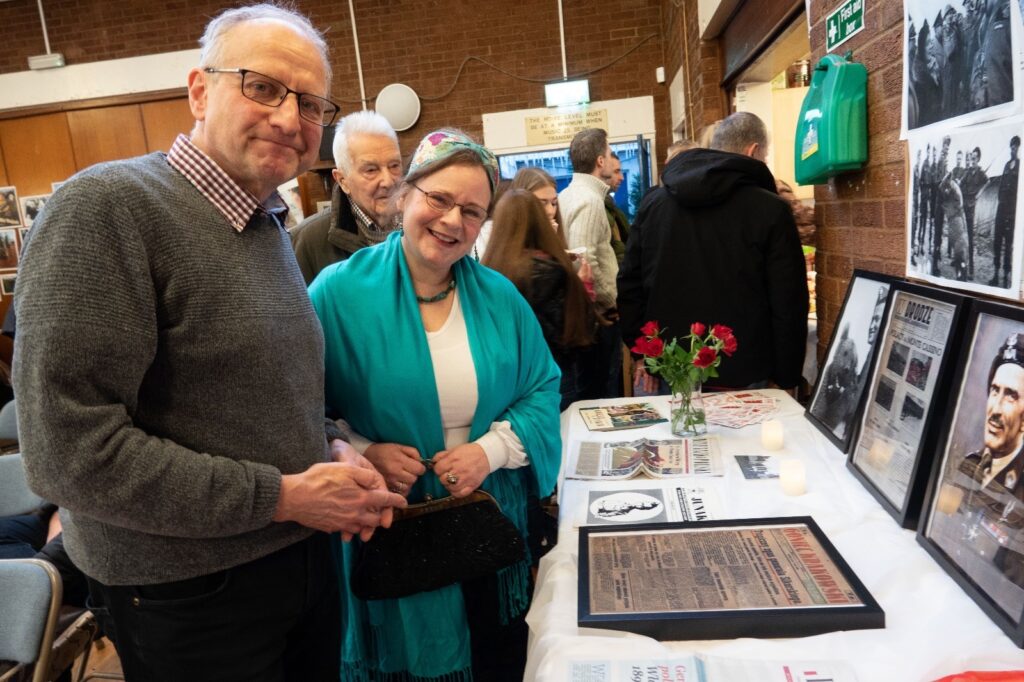
Forgotten Heroes was published in 2014 and proceeds were split between a war memorial for a Polish veteran and the cancer research at the Inspiration For Life Trust Fund led by a University of Sheffield’s physics lecturer.
After his book was published, another change of direction lay ahead. Following a decade in the utilities industry, Peter decided to return to education. He completed a PGCE and became a mathematics teacher specialising in supporting pupils with special educational needs at Rotherham College where he has worked since 2013.
Yet another change lies ahead.
In September, Peter is set to leave Rotherham, the town that has been at the centre of his life for more than six decades, and return to Poland, the country his parents were forced to leave after the war.
The decision follows the death of his wife Bogusia after a five-year battle with ovarian cancer. She sadly died in September 2023 and was laid to rest in Poland on what should have been the couple’s 30th wedding anniversary.
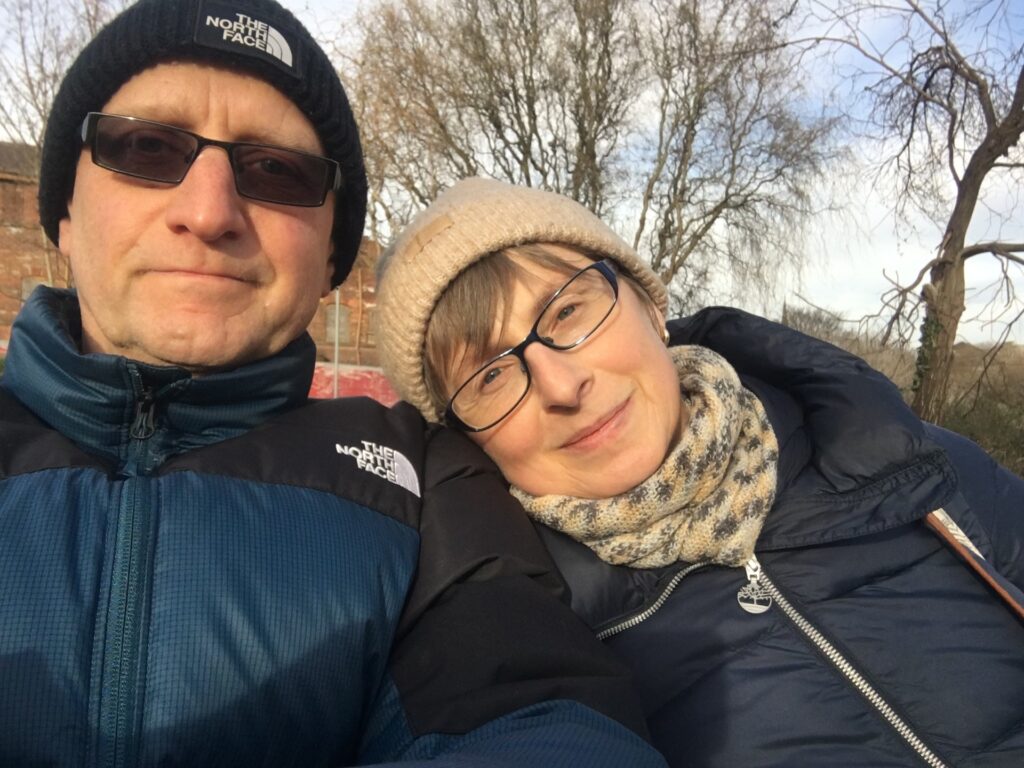
With no close relatives remaining in Britain, Peter says the move will allow him to be closer to her family and begin a new chapter surrounded by familiar faces and support.
Bringing his journey full circle, he has recently sold his Masborough home to the Help 4 Homeless Veterans charity to use as a halfway house – echoing the support his own family provided Polish veterans for more than 40 years.
It is not the first time that loss has altered the course of his life. The deaths of his father, mother and now his wife have each forced him to find a new direction.
For a man who has spent years discovering distant worlds, perhaps the greatest journey has been navigating his own. Yet through it all, he has kept looking skyward — proof that even after the darkest nights, new stars can still appear.