

There are some dates that become part of a town’s DNA.
For Barnsley, 12th December 1866 is one of them.
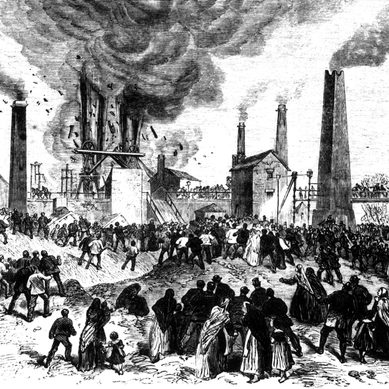
Just after one o’clock on that Wednesday afternoon, a deep rumble shook the winter air around Hoyle Mill. Seconds later came the words no mining community ever wants to hear: “The Oaks has fired.”
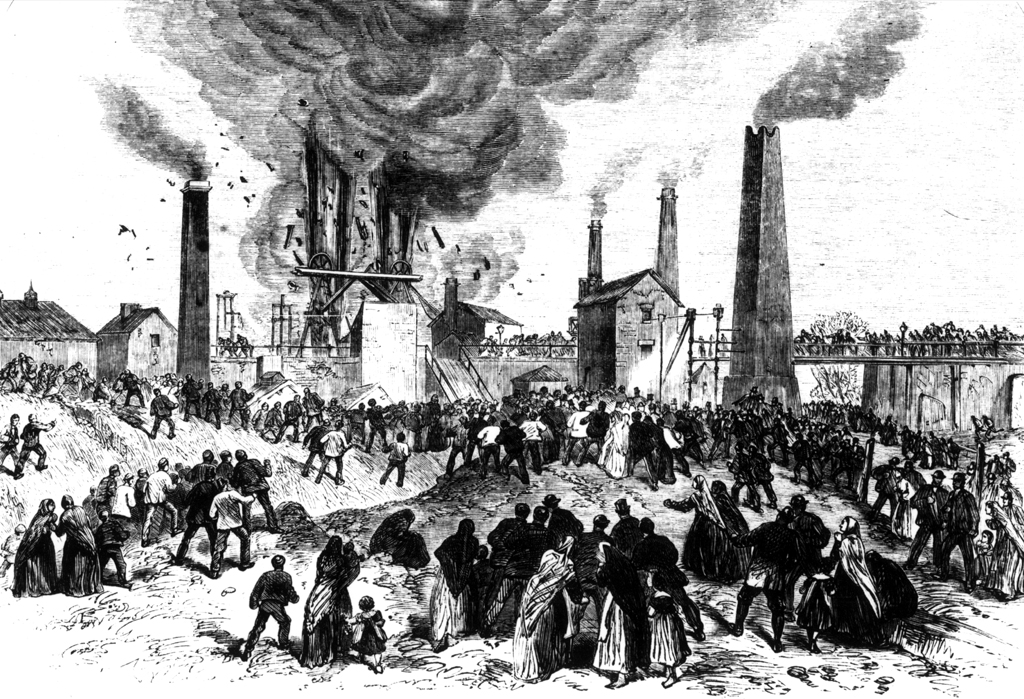
For the mining families of Barnsley, those four words would become synonymous with grief. Hundreds of men and boys had been working underground when it exploded. Droves of wives, parents and children with pale, fraught faces arrived anxiously at the pit top in desperate search of answers.
Most knew in their gut what that was.
It became the worst mining disaster in English history, with an official death toll of 361 people plus 18 horses and ponies.
The terrible events of December 1866 changed Barnsley forever. Now, 160 years later, the town comes together to remember the men and boys who never came home.
Coal was the lifeblood of Victorian Barnsley. The growing industrial town and its surrounding villages depended upon the pits not simply for employment, but for almost every aspect of community life.
The Oaks Colliery at Hoyle Mill was no exception. Men worked alongside boys as young as ten in an environment that was physically demanding, dangerous and largely unrecognisable to us today.
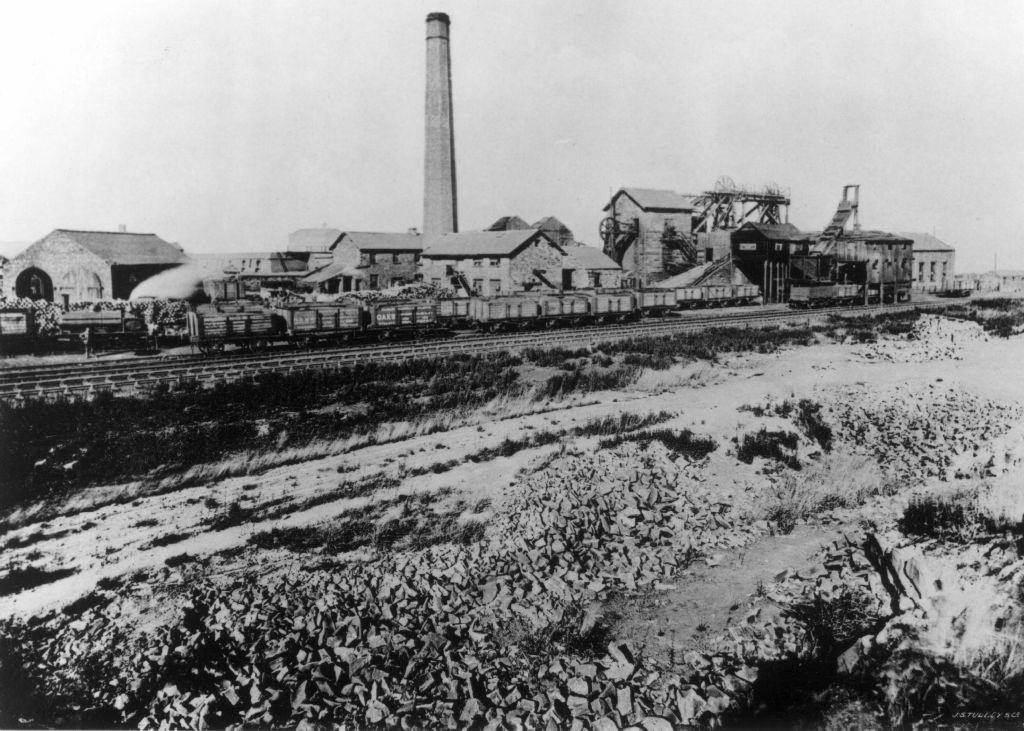
On that December afternoon, less than two weeks before Christmas, around 340 men and boys were working more than 200 metres underground as colliers, dayboys, hurriers and trammers. It was a busy day as Wednesdays were ‘making up’ days for wages and they wanted to earn extra money for the festive period, but the majority would not live to see the end of the day, never mind Christmas.
At around 1:20pm, towards the end of the day shift, the first explosion tore through the workings caused by the ignition of firedamp– or methane gas. The force was immense, destroying both cages in the shaft and leaving devastation below ground.
Above ground, dust, debris and wood blown out of the 260-metre-deep shaft landed up to five miles away.
The pit immediately became the focus of a desperate rescue effort. Men came from neighbouring collieries to attempt the impossible. Despite the grave danger, around 70 brave volunteers, led by Parkin Jeffcock, an engineer from Derby, descended into a mine filled with smoke, poisonous gases and collapsed workings. They struggled to breathe in the confined tunnels but pressed on quickly, knowing another explosion could happen at any moment.
Some survivors were discovered at the bottom of one of the shafts. Around 20 badly injured men were brought to the surface, but only six ultimately survived their injuries.
The enormity of the event meant that compiling names of those missing started immediately. It was estimated that 334 of the workers had died, either from perishing in the explosion, from afterdamp poisoning, or from the injuries sustained in the blast.
The rescue operation to recover these bodies continued into the next day, but the courage of the volunteers inevitably came at a terrible cost.
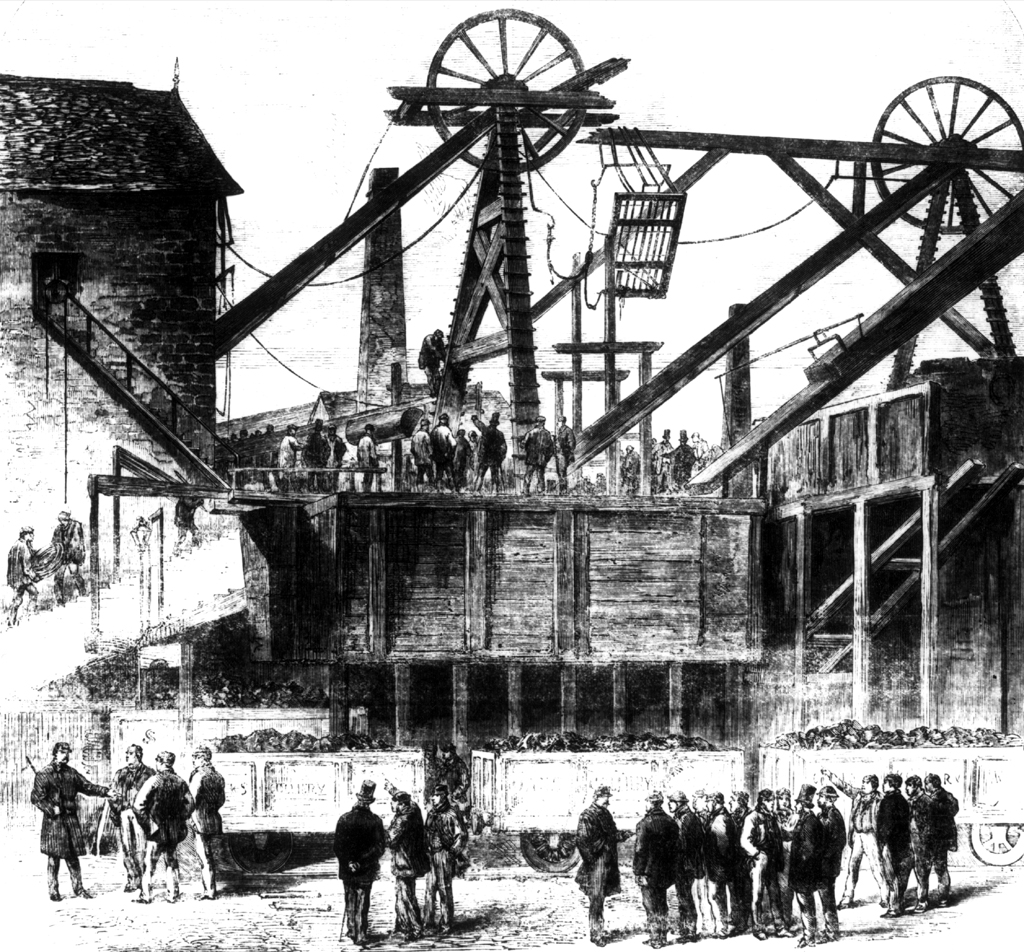
The following morning, at around 9am, another explosion ripped through the pit, killing 27 of the rescuers including Parkin Jeffcock. The death toll was now 361.
Two further explosions happened during the day and the pit was on fire, so the hope of finding anyone alive was dashed.
However, the following morning, on Friday 14th December, a glimmer of hope came ringing out when a signal bell was heard deep within the mine.
Could someone actually still be alive?
A small bottle containing brandy was lowered down the shaft. When it was hauled back up, the bottle had disappeared.
Two volunteers went down the pit and found Samuel Brown, one of the original rescuers who had been knocked unconscious in the second explosion but had miraculously survived. The luckiest man in mining history.
Over the next four days, there were another 14 explosions, so it was decided to seal the pit’s three shafts to extinguish the fires and prevent further explosions.
The Oaks disaster did not end when the explosions stopped.
Behind the numbers were hundreds of families suddenly without husbands, fathers and sons Men and boys who had left home that morning expecting to come back. Fathers and their sons killed together. Brothers, uncles, nephews. Entire generations wiped out.
The loss devastated communities around Hoyle Mill and across the Barnsley coalfield, as well as further afield. Ten members of the Barker family from Ingleton in North Yorkshire died in the Oaks; they had come to Barnsley in search of work.
The disaster also left 167 women widowed and 366 children under 12 without a father.
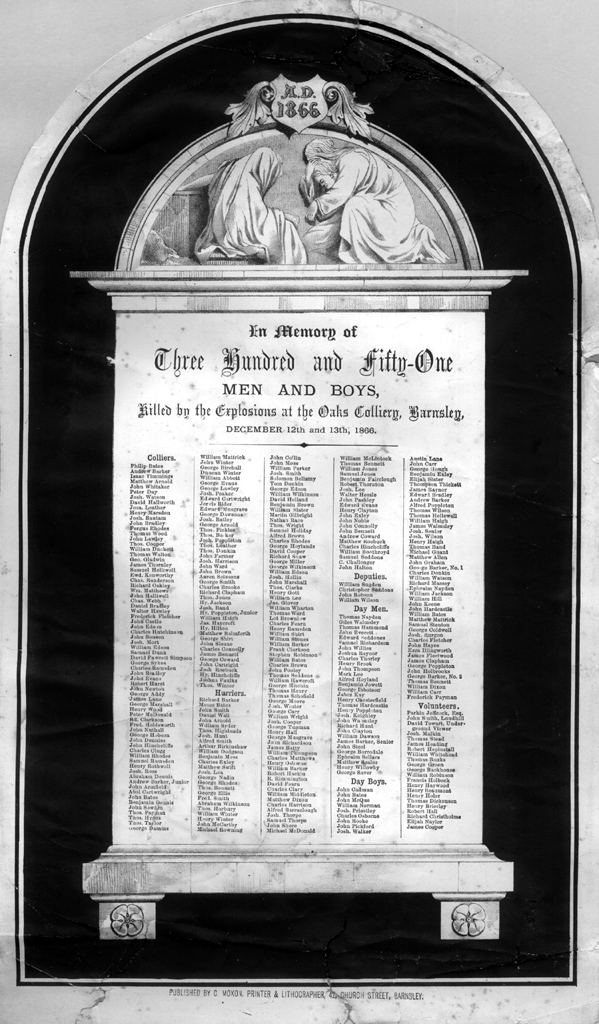
Money was raised for the widows and orphans, with contributions arriving from across the country. Queen Victoria donated £200 to a relief fund, while the Lord Mayor of London contributed £11,695 from his mansions fund. The people of Barnsley also raised more than £48,000.
Although the Miners’ National Union (MNU) was in its infancy, having only been founded three years before the disaster, it did pay out £8 per worker for funeral costs, as well as five shillings a week to widows and one shilling a week for every dependent child under 12.
Amongst all the loss and sadness, the Oaks disaster also prompted renewed debate about mine safety and the need for stronger regulation.
The Barnsley Bed coal seam was known for being very volatile with regular gas discharge. There had been explosions before in 1845 which killed three people and 1847 which killed 73 out of the 95 workers underground.
The pit, which was only sunk in 1824, was almost closed in the later 1840s due to safety concerns, but alterations and repairs meant operations could resume in 1851.
However, things hadn’t improved. Only a decade before the Oaks disaster, in 1856, almost 400 workers went on strike for ten weeks due to the fear of an accident occurring due to alleged incompetence of the resident manager.
Even at the start of December, less than a fortnight before that fatal event, workers had complained about how the lack of ventilation was making them giddy and faint.
And at the Oaks inquiry, it was found that a government inspector had not visited the colliery for many years; the district mines inspector resigned during the inquest on grounds of ill health.
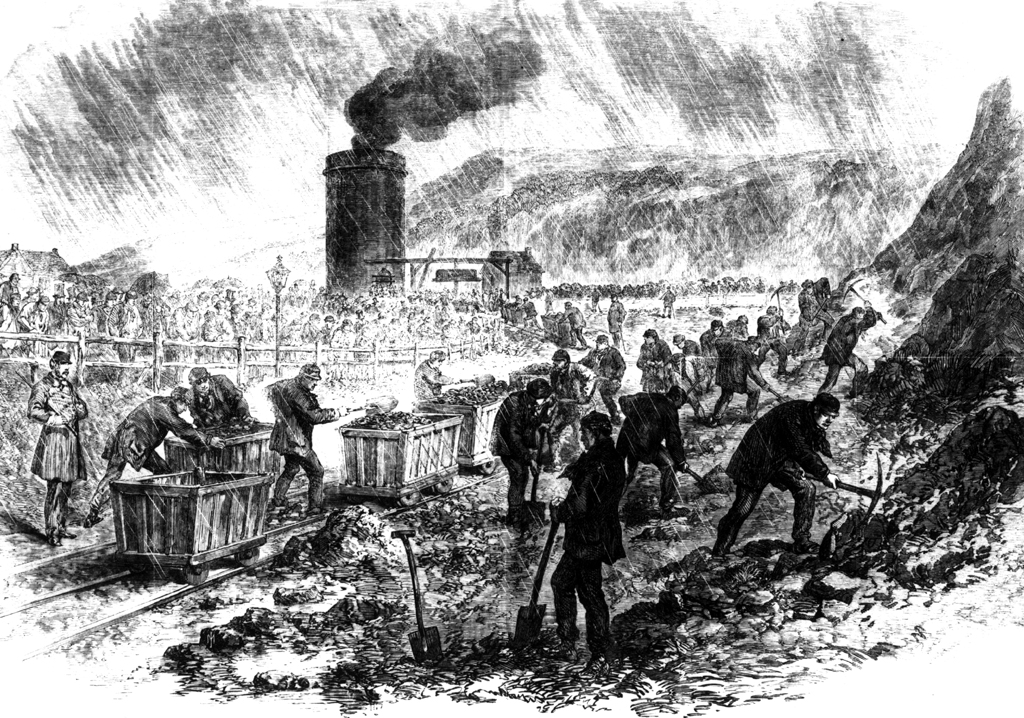
What happened here in Barnsley became part of a wider movement for better regulation of Britain’s coal mines, culminating in the Coal Mines Regulation Act of 1872, which introduced important new requirements, including certificates of competence for mine managers and stronger provisions concerning inspection and ventilation.
The shafts did reopen, albeit to try and recover the remains of the bodies preserved underground. This continued until 1869 but 80 or so of the deceased were never found.
Two new shafts were sunk in 1870 three-quarters of a mile up the road near Ardsley at what became known as the New Oaks Colliery.
Over subsequent decades, the old Oaks site became part of Barnsley Main Colliery which had its own turbulent journey until closure in 1965.
The mining landscape may have changed dramatically, but the memories remain – in archives, memorials, family histories and the stories handed down through generations.
Across the town there are three memorials for the Oaks disaster. The first was erected in 1879 at Christ Church in Ardsley. A second, in honour of Parkin Jeffcock and the volunteer rescuers, came in 1913 at Kendray Hospital funded by Samuel Joshua Cooper before he died.
The third and latest memorial was unveiled at the NUM headquarters in the town centre after the 150th anniversary in 2016, crafted by Barnsley sculptor, Graham Ibbeson. His memorial depicts a mother and child rushing to the colliery on hearing the explosion, a pile of coal streaming from her back. She stands atop a miner laid down working at the narrow coal seam, while a relief displays the circle of life for a mining generation.
Today, 160 years later, the Oaks disaster can seem like a distant Victorian tragedy. But it should not be remembered simply as a story of death, but of courage: the courage of the miners who went underground every day, the rescuers who descended into a burning mine to search for their comrades, and the families who rebuilt their lives after an almost unimaginable loss.
Their story is still Barnsley’s story.
And this December, the Oaks story will once again be brought into the heart of the town.
On Saturday 12 December, the acclaimed Remember the Coal show will form part of the 160th-anniversary commemorations, bringing together the music, memories and culture of the coalfield at the NUM Miners Hall on Victoria Road.
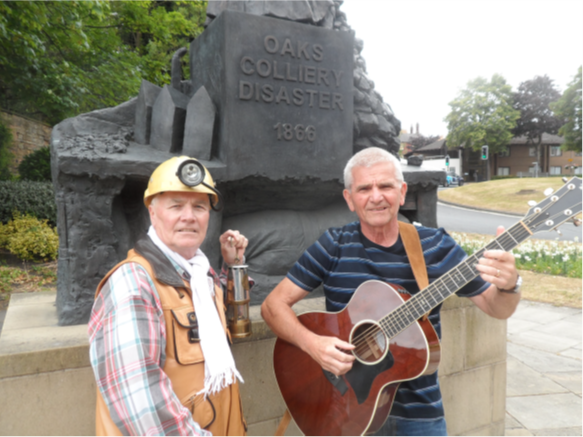
The two-hour show sees Barnsley musician Alan Wood perform original music and folk songs interspersed with spoken narrative by John Snook, a former iron and steel worker from Wales.
Alan originally wrote and performed Remember the Coal with Yew Tree Youth Theatre group in 2017 to help raise funds for Graham Ibbeson’s Oaks memorial.
It has since developed into a two-man musical story telling the history of coal mining in Britain. The show covers topics like child labour, the beginning of the Industrial Revolution, and the closure of deep mining in 2015. While it does touch on disasters and tragedies such as the Oaks, it also illustrates wider changes that took place in both the industry and society.
The show starts at 6pm on Saturday 12th December and tickets are £7 which can be booked in advance online at https://wegottickets.com/f/24681
Venue is Barnsley Miner’s Hall, Victoria Road, Barnsley S70 2LS and doors open at 5:30pm