

Where once world-renowned porcelain and pottery was made for royalty and aristocracy, Rotherham’s Rockingham Kiln has been thrown a lifeline thanks to grant-funded repair works.
The Swinton-based kiln is one of 12 heritage sites in Yorkshire that has been taken off Historic England’s Heritage at Risk Register following extensive structural repairs.
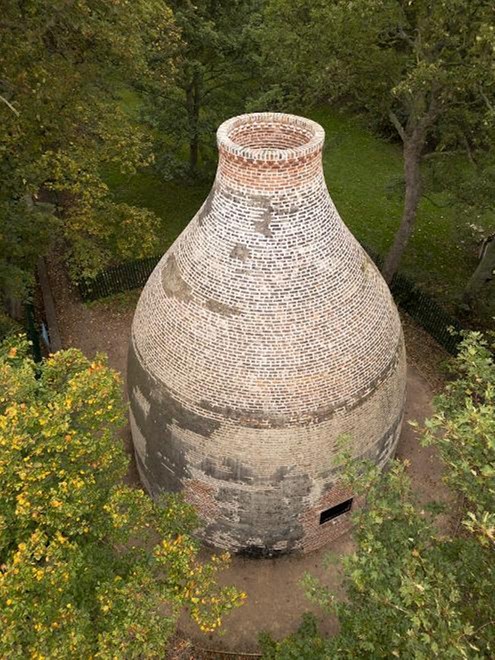
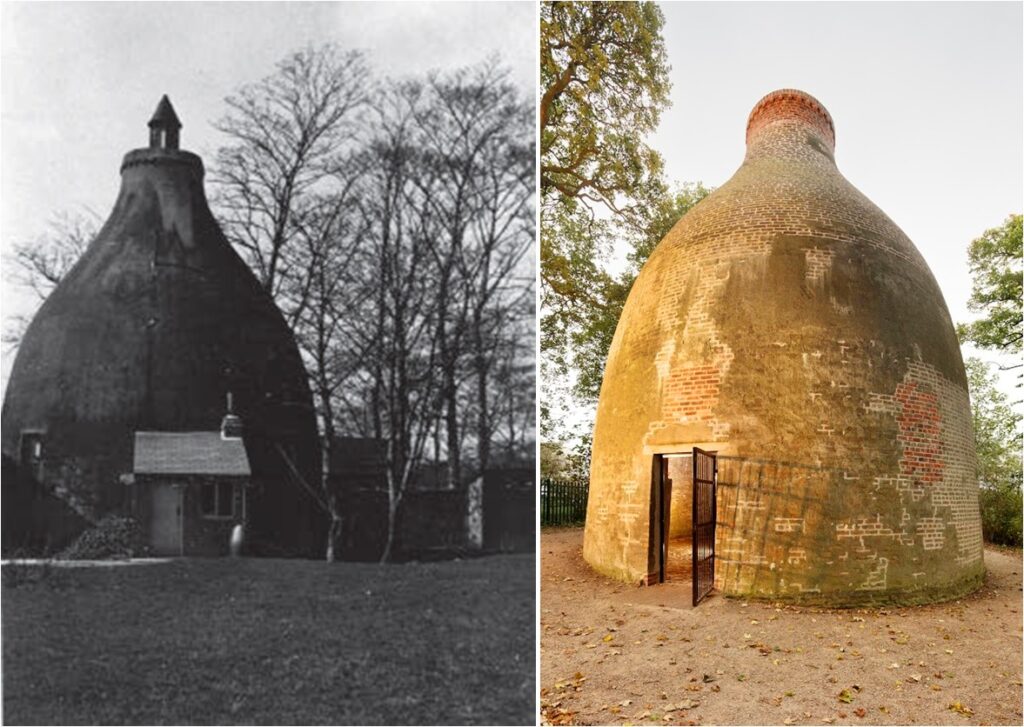
Rockingham Kiln, which is an important part of South Yorkshire’s industrial heritage, was placed on the register in 2022 due to decaying brickwork, mortar and timber and vegetation growing out of the top half of the bottle-shaped building.
Rotherham Council received a grant of £77,000 from Historic England in 2024 which has enabled specialists to repair the rare 210-year-old structure thought to be Yorkshire’s only surviving 19th century kiln.
The kiln was built in 1815 during the Battle of Waterloo, which is why it’s sometimes known as Waterloo Kiln. It was built for John Brameld, a ceramist who took over the original Swinton pottery works that had been established in 1745 by Joseph Flint.
When production came to a standstill in 1801, John had appealed to William, 4th Earl Fitzwilliam from Wentworth Woodhouse for help who provided a £2,000 loan to enable Brameld to buy the business outright from Leeds Pottery.
John and his four sons – William, Thomas, George Frederick and John Wager – expanded the pottery works and its earthenware product range.
As well as building new structures, such as the 56-foot-high kiln to use for firing and glazing, they also developed their new ‘brown China’ range with its wonderful treacle-like glaze.
Despite its popularity, the family business proved unsuccessful and the Bramelds got into financial difficulty. The site was heavily supported by the Earl throughout the early 19th century who ultimately saved it from bankruptcy in 1826.
The Bramelds had started to experiment with more refined porcelain products. They bought clay and stone from Dorset and calcined bones and flint from Kent and Sussex to use within their rococo-style porcelain, but this put a financial burden on the business.
The Earl, having been impressed by this new-era of work churned out by the Bramelds, permitted them to use the Rockingham name and crest, hence their rebrand to Rockingham Pottery.
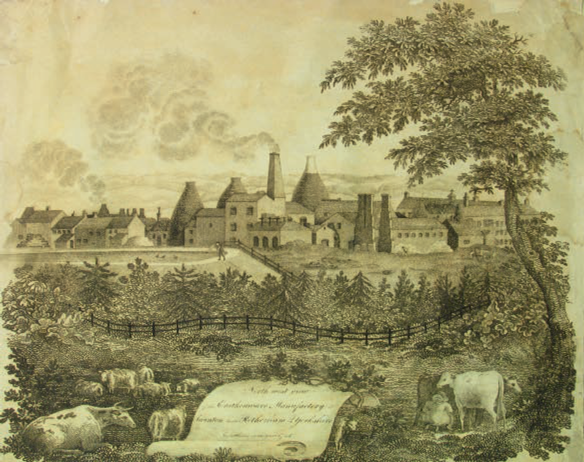
During the mid-1800s, they produced some of the best porcelain in the world and became renowned for their flamboyant, somewhat gaudy style featuring botanical, landscapes and floral designs.
Perhaps their best-known work is the striking pair of Rhinoceros vases made in 1826 and painted by Thomas Brameld. Standing at three-feet-tall, they were thought to be the largest single piece of porcelain in existence. One you may have seen in Clifton Park Museum, and the other is in situ at the Victoria and Albert Museum in London.
At the height of production, they employed hundreds of men, women and children who would beat clay, throw pots, make moulds, load kilns, paint, glaze and gild items, and pack and ship the orders. They had a team of talented artists who each specialised in painting or modelling either flowers, butterflies, family crests or landscapes.
No expense was spared and Rockingham pottery quickly caught the attention of high society across the world. Any special guest staying with the Earls Fitzwilliams would be given a guided tour of the pottery works on Blackamoor Road to see the beautifully glossy milk-white porcelain in production.
One of their most famous customers was King William IV who ordered a 200-piece dessert service. The £5,000 set was designed by John Wager Brameld and took eight years to create – by which time the King had died. It was instead presented to his heir, Queen Victoria, and used for her coronation banquet in 1838. It still exists today and can be found at Windsor Castle.
However, the result of such a lavish and lengthy project would become the icing on the cake for their demise. They failed to turn a profit and owed the Fitzwilliams over £13,000 in rent. With the earldom now in the hands of William’s son Charles, the 5th Earl didn’t share his father’s enthusiasm for pottery, nor his leniency.
All financial support ended and he seized all assets, forcing the Bramelds to close up shop in 1842.
Afterwards, the pottery works was carried on by Isaac Baguley and his son Alfred. Isaac had been manager of the gilding department for many years. However, they focused on decorating pre-made pieces and eventually moved their operation to Mexborough.
Following the end of the pottery works, a door and windows were added to Rockingham Kiln so it could be used as a smallpox isolation hospital in the early 1900s before it then became a private residence.
It was given Grade II* listed status in 2000 and Rockingham Kiln, along with the nearby Pottery Ponds, now managed by Rotherham Council who have, in recent years, made it one of their key community projects.

