A life spent painting other people’s stories inevitably begins with your own.
For figurative artist Richard Kitson, his story begins with a working-class upbringing in South Yorkshire where wanting to be an artist was a bit like colouring outside the lines.
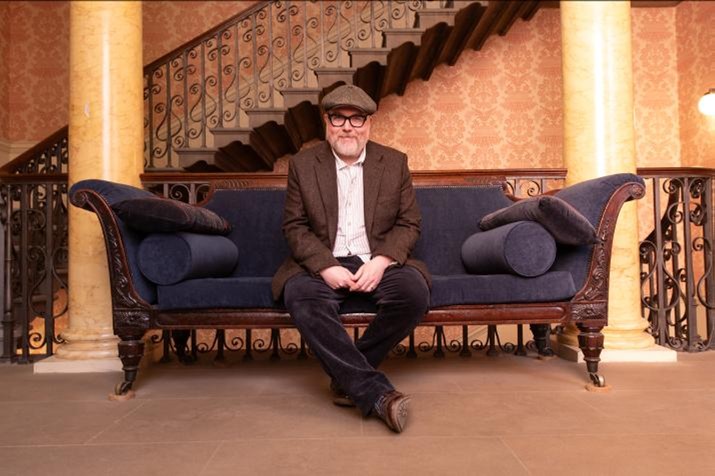
Those around him might not have pictured Richard making a career out of painting, but it’s unfolded like a portrait in progress: doodling in the margins of schoolbooks, experimenting with watercolour landscapes, meandering through teaching for a decade, and then a shift to full-time portraiture aged 40.
That patience and persistence has led to a rare selection by the National Portrait Gallery after twenty years of trying and a solo exhibition at Wentworth Woodhouse this spring, his first in seven years.
Ahead of the exhibition’s opening, we met up with the Barnsley artist to hear how his journey has been neither fast nor straight, with each detour leaving its mark on the observation and care that define his portraits today.
Born in Sheffield in 1981, the second of three Kitson children, Richard and his family moved from High Green to Hoyland Common in Barnsley when he was six.
He grew up in a typical ‘80s working-class household: his mum Denise worked as a dinner lady before later becoming a teaching assistant, while dad Pete was a steelworker until the upheavals of Thatcher-era privatisation reshaped the industry.
Creativity has been a constant throughout Richard’s life, the hallmark of a typical middle child left to his own devices.
“According to my mum, I’ve always been into art. To keep me occupied, she used to sit me on a big piece of paper with some crayons but I can’t remember any of that.”
At secondary school, Hoyland’s Kirk Balk, Richard says he was always happiest in the art room, even though he wasn’t naturally brilliant at art to begin with. It was mainly a distraction; he was that kid doodling on his books and staring out of the window.
“There was never any ambition behind my art to begin with, I was just fortunate to not be any good at anything else. I was rubbish at maths, struggled with science and average at English. My schoolbooks were always covered in daft shapes and characters.
“My Auntie Connie bought me my first set of watercolours when I was 11 and my grandad used to say ‘why don’t you draw summat nice instead of those bloody foul creatures. What about a nice horse?’ I’d have walked off a cliff for my grandad, so I started practicing countryside scenes with horses in them.”
Grandad Des is perhaps where Richard gets his creativity from. Des had an interview for art school when he was 14 but was told he was too old – that was in the late 1930s just before the war started.
“My grandad was the most encouraging. If I had a hissy fit and threw my brush across the room, my mum was ready to give me a clip round the ear but Grandad would say it was my artistic temperament. Then he’d send me off to find my nan for some Bakewell Tart to calm me down.”
In his teens, Richard began to show real promise as an artist. His mum took him to evening classes at John Woods’ framing gallery on Regent Street in Barnsley. It was supposed to be an adults-only class, but John realised young Richard could paint to a fairly high standard even though he was only 12 or 13 at the time, so they let him stay.
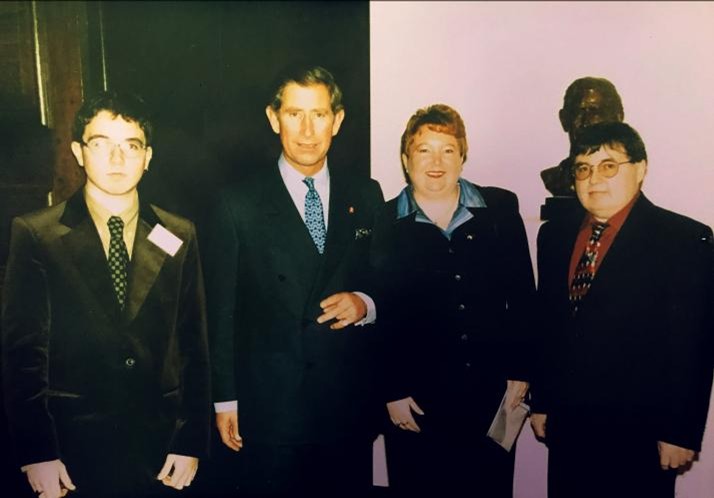
Then, in 1998, as he was getting ready to finish secondary school, he had his first brush with success. Richard entered a painting into the Young Artists Britain competition which was selected for an exhibition at Hampton Court Palace. He and his parents met the then Prince Charles at the opening event.
After leaving school, Richard went on to study A levels at Barnsley College. There, his focus shifted from landscape painting towards portraiture as he embraced the challenge of capturing a personality, a story, or a moment in someone’s life.
“I like portraits because each face is different. All trees are technically different, but you can get away with it with a tree; if you don’t get it quite right it will still look like a tree. Whereas if I draw a person, I’ve got to make sure that others will recognise them.”
But 17 was very young to be making big decisions and Richard lost his way for a while, fuelled by new friends and a raucous punk band called Strawberry Jack with whom he played guitar.
“All the way through school I just kept my head down and got on with it. I seemed to meet my tribe at college as it was full of artists and musicians. Our band was awful but fun, a bit obnoxious, but all nice lads really. I just used to leap about the stage because I was only about nine stone wet through then.”
Art took a back seat and Richard’s grades started to slip. Six months in, he quit college and moved to Penistone Sixth Form where he was taught by art teacher Anne McPake who Richard says had a lasting impression on him.
“Anne took me by the scruff of the neck and told me I was having problems because I wasn’t being challenged. I learnt more from her in two years than I’ve ever learnt from anyone. She taught me a lot of academic drawing skills and distilled the idea of drawing from observation which makes it more difficult to invent.”
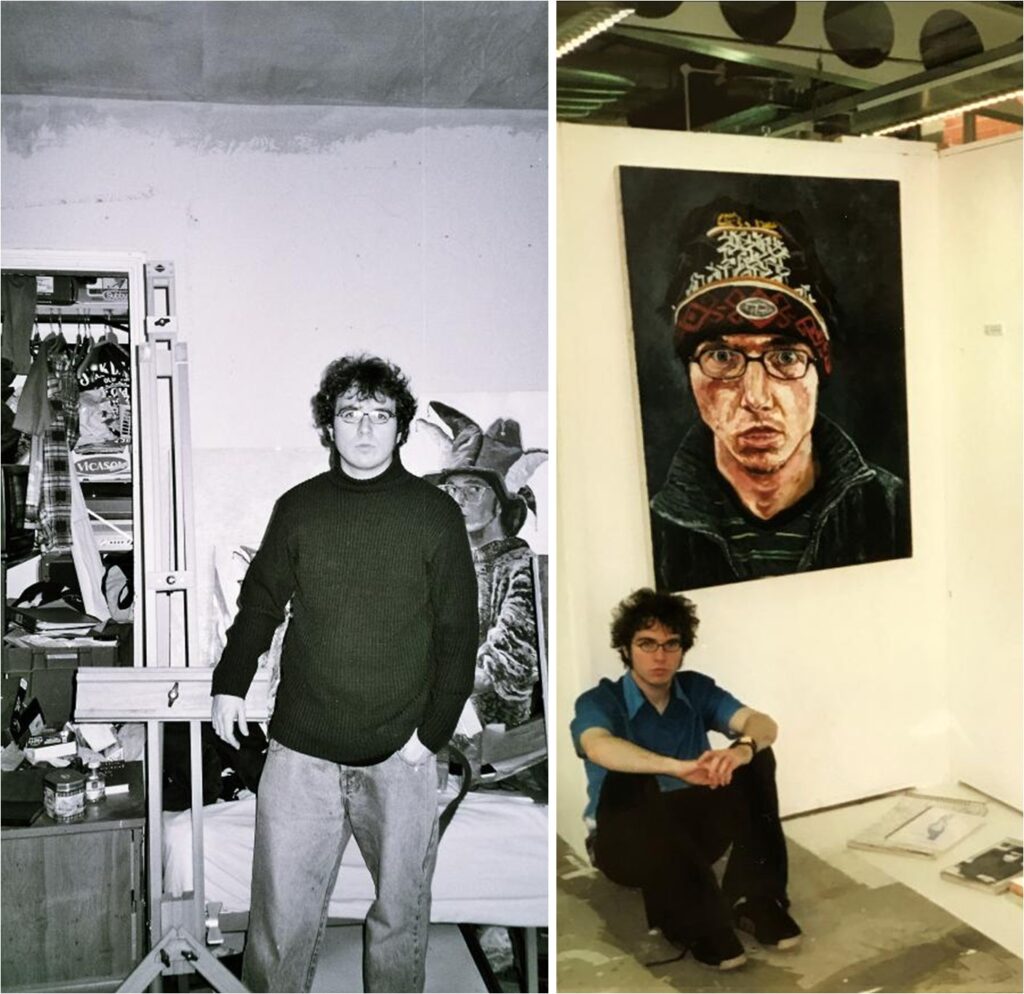
After those two years at sixth form, and having calmed down a fair bit, he went back to Barnsley College to do an art foundation course. It is here he met another woman who would have a big impact on his life: his future wife Joanne.
While Richard favoured portraiture, Joanne’s specialism was painting animals. The art foundation led them in different paths; she realised she didn’t need an art degree to paint animals and instead chose to study psychology, while he took a year-long sabbatical and worked as a gallery enabler at Barnsley’s Cooper Gallery to figure out what he wanted to do next.
Seeing the bigger picture that art was his future, Richard decided to do a degree in fine art at University of Leeds.
At that time, the art degree was taught at Bretton Hall College, what is now the Yorkshire Sculpture Park. Richard had a year at Bretton Hall before the course was moved to the main Leeds campus.
However, by the time he finished his degree, he’d decided not to pursue a career in art, having had the enthusiasm rubbed out of him by his tutors who called him a Sunday painter.
“At the time, the type of painting I did was old news. I was seen as a dinosaur. I didn’t pick up a pencil for two years after university.”
Back to the drawing board he went, getting a job at the sculpture park while seriously pursuing his other love of music.
But while it was fun, and he supported some interesting people in the blues and folk scene, Richard realised he wasn’t committed enough to try and make it work and it was a huge distraction more than anything.
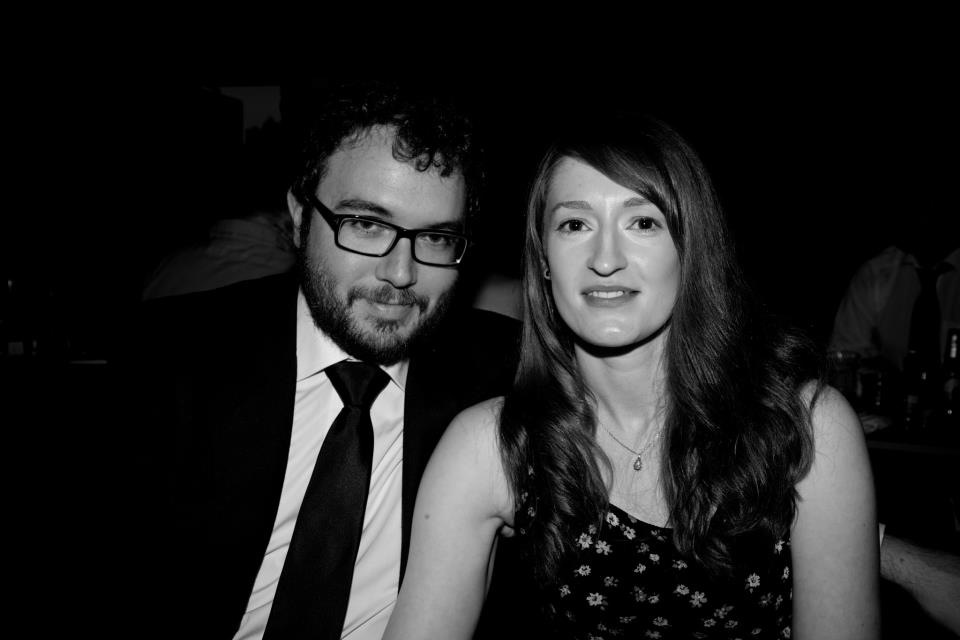
By this time, Richard was approaching 30, he and Joanne had married after nine years together and bought their first home in Birdwell. He realised he needed to be more financially stable with a ‘proper job’, so he retrained as a teacher.
He started teaching evening classes at his old stomping ground of Barnsley College where he was then supported to do his teaching qualifications alongside being an A level art tutor.
While teaching, another opportunity came into the frame that sketched out a new path for Richard.
He’d applied for the 2018 series of Sky Arts’ Portrait Artist of the Year and got through to the first round where he painted Paralympian Kadeena Cox.
While he didn’t progress in the TV competition, the episode serendipitously aired just before his first solo exhibition at the Cooper Gallery and proved to be an invaluable bit of PR.
Enquiries were coming in left right and centre for him to do demonstrations for local art societies. And before he knew it, demos led to workshops and a busy freelance schedule emerged.
It also put Richard in front of an international audience, touring his exhibition to Barnsley’s twin town of Schwäbisch Gmünd in Germany after catching the eye of head of their Twin Town Society.
Richard’s name and reputation grew to such a point that he knew he couldn’t sustain teaching full-time. He went part-time as an art teacher at Worksop College boarding school before deciding in 2021 during the Covid pandemic to pack it in completely.
“It was the job of being a teacher that eventually got to me. I just wanted to show kids how to paint and draw but that was such a small element of the job. I knew I didn’t want to have this forty-year career even if it came with a good pension; I’d sooner drop dead at my easel if I had the choice.
“It was just before I turned 40 and I guess I hit a crossroads. I knew that if I didn’t do it then when I was still daft enough then I probably never would.”
Trading the security of the classroom for the uncertainty of being a full-time artist might have surprised people around him, but it opened so many more doors for Richard on a national level.
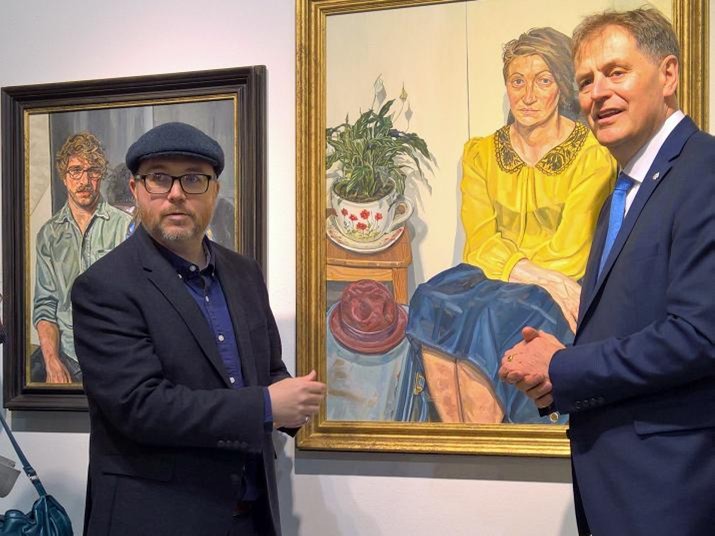
His work has been shown in prestigious exhibitions across the country including the Ruth Borchard Self-Portrait Prize, Figurative Art Now, the Cork Street Open, and the Royal Society of Portrait Painters, of which he’s been included three times.

Last year, after twenty years of trying, he got into the Herbert Smith Freehills Kramer Portrait Award at the National Portrait Gallery in London. This is like the Oscars for portrait painters that sees around 2,000 applicants from across the world and only 46 are selected.
“Thousands of people are trying to get into these exhibitions so the chances are very slim. It’s a nice bonus when you do but you can’t pin your hopes on it or you’d never paint again.”
His latest exhibition at Wentworth Woodhouse will be his first solo show in seven years. Called ‘From Life’, it features ordinary sitters – his wife and main muse Joanne, mum Denise, former students, and others who trusted him to capture them from life rather than photos.
“It’s been a while since I’ve exhibited in a venue of this scale. As a kid I’d walk down the lane and stop at the gate wondering what was in there as you couldn’t go in at the time. The idea of this show was to bring portraiture back into a place that would have commissioned portraits but focusing on everyday people.”
To paint a face is to make a series of decisions about who someone is. You don’t just capture their likeness, but rather interpret their identity. And you can tell a Richard Kitson painting a mile off – though he shrugs off my suggestion of him having a distinctive style.
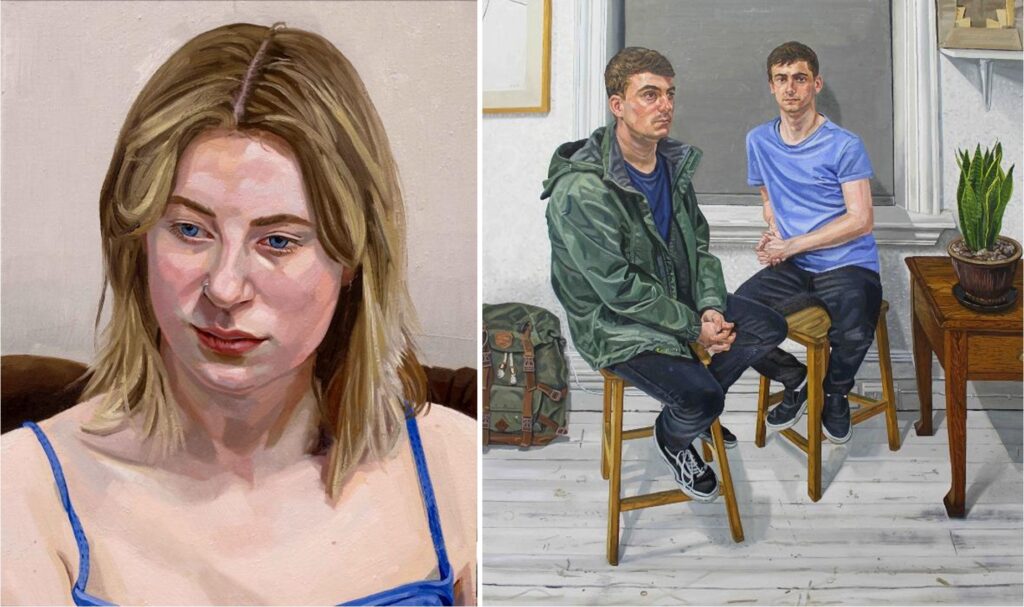
“I’m always interested when people say I’ve got a style because I don’t know where it’s come from. I guess it’s innate, a bit like your handwriting, but while I wear my inspiration on my sleeve I’m a painter not a forger so I’m never going to make an exact replica of my paintings.”
That’s because his paintings are like painterly expressions rather than photographic idealism. In a world obsessed with speed, he asks people to sit still for hours at a time, week after week, month after month, gradually building that rapport and professional relationship that enables him to depict their unique characters.
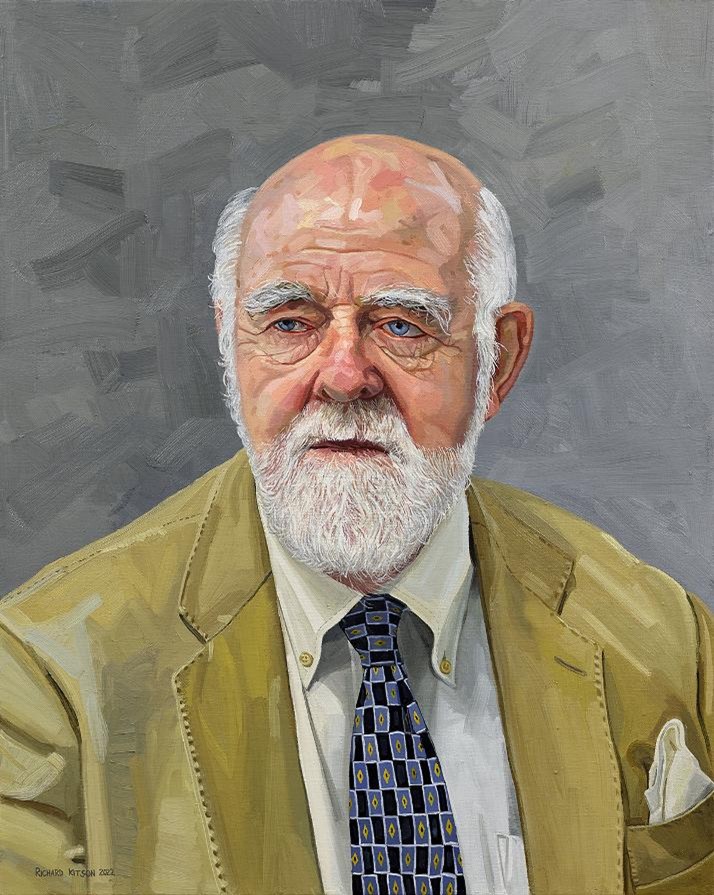
“We live in a digital world where you can be whoever you want to be on social media and project an image that’s not always true. I think reality is more interesting than fantasy so there will never be a soft focus to my work.
“If someone has a wrinkle, they’ve earnt that wrinkle. Self portraits are more exciting to me now then when I was younger as I’m finding the ageing process interesting – my beard is whiter and more wizened.”
A face that features heavily in his work is wife Joanne. Richard says he doesn’t have a favourite piece but his most sentimental is one he did of Joanne during the pandemic with him reflected in the mirror behind him.”
“In the early days, I think Joanne thought of sitting in a romantic way but now it’s maybe a chore like washing the pots. She likes that I’ve told our story through the paintings I have made of her in the 24 years we have been together.”
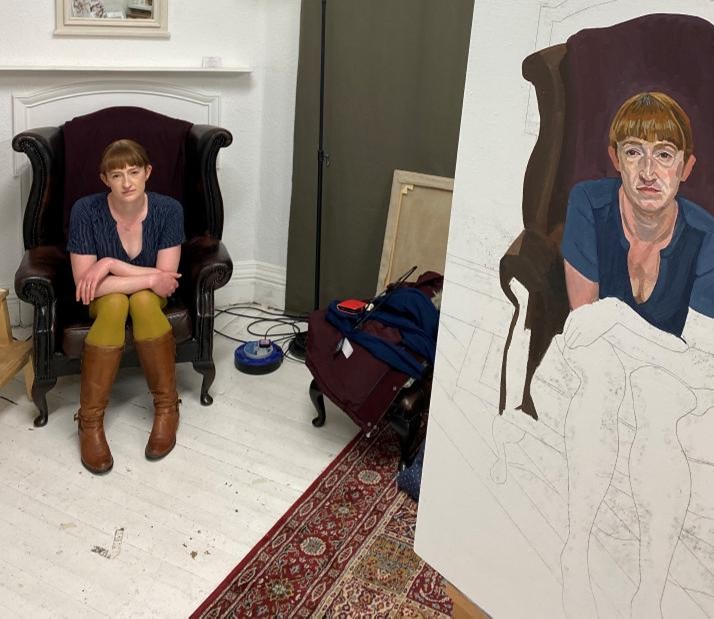
From Life is on at the house until 24th May, and Richard will also be at the Great Yorkshire Show this July.
Alongside exhibiting, Richard continues to share his craft through workshops, demonstrations and private lessons at his studio on Eastgate in Barnsley and at places like Chatsworth House.
After taking a year out to complete his master’s degree in 2024, 17 years after finishing his undergraduate degree, he’s enjoying being able to pass on the skills and insight to other creative people from Barnsley and beyond.
“It’s not part of the playbook for a working-class lad from Barnsley to pursue a career n art. It’s not easy and you’re basically cherry picking a living. Doors aren’t going to open for you. I’m not selling paintings for thousands of pounds every day and driving a Rolls Royce. I drive a marginally knackered Volkswagen. People ask why I still work in Barnsley but it’s because I can live the life I want to live here.”