


For most people, loose change is something to spend or ignore.
But for Paul Sargeant from Rotherham, coins have fascinated him for over forty years, with numismatics – or coin collecting – becoming a lifelong pursuit.

It started in the 1980s when Paul bought a metal detector and headed out searching in fields with his young daughter. They found a coin sticking face up in the mud and, as we all know, if you see a penny you pick it up.
Well, in Paul’s case it was the now obsolete ha’penny but it didn’t bring him half the luck. One find led to another and, before long, a casual curiosity turned into more than four decades of searching, collecting and uncovering fragments of history buried beneath his feet.
“I got bitten by the bug,” Paul says. “The more you look, the more you find. Coins all have a story to tell which is what I find the most interesting about collecting them. Whose hands have they been in? What were they used to buy?”
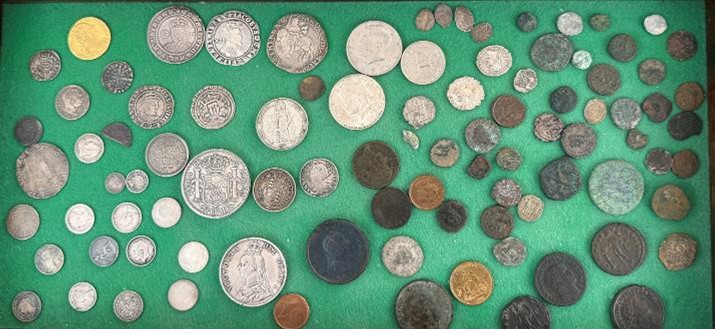
Now aged 75, Paul has amassed a sterling collection that spans centuries – the oldest being a silver Celtic stater of the Iceni tribe who were led by the warrior queen Boudica. He bought the Iron Age coin, one of the earliest examples of coinage in Britain, from a dealer in London as part of a hoard.
Coins from the Roman era are some of Paul’s favourites, with one featuring Romulus and Remus, a Hadrian coin from the second century, and a common legionary coin of Mark Antony.
“Many Roman coins don’t have dates on, so you have to work out how old they are by what Emperor is depicted on them.”

His collection also features medieval hammered coinage from the Norman times, with short and long cross pennies, as well as Tudor coins from Henry VII, Henry VIII and Edward VI’s reigns.
Hammered coinage was the most common form, dating from the invention of coins in the first millennium BC right through to the early modern period. Coins were produced by placing a blank piece of metal of the correct weight between two dies and hammering it to indent the image.
In 1560, the Tower of London Mint added milling machinery for the Great Recoinage and hammered coins eventually became demonetised in 1695.
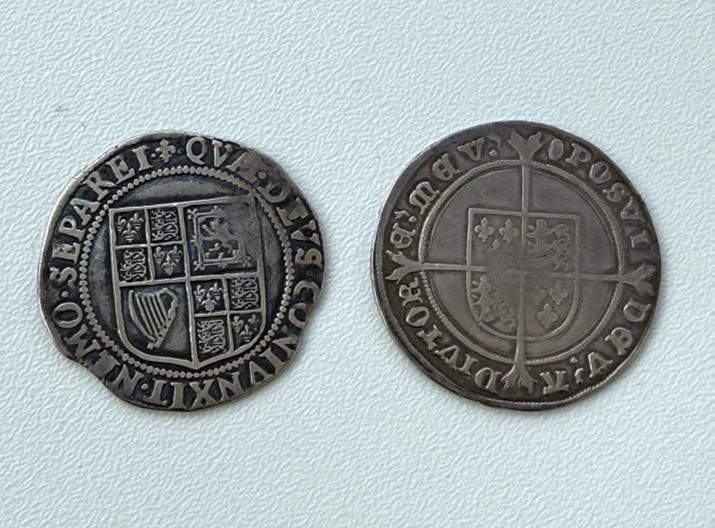
Paul says his most exciting find is an Elizabethan shilling that he uncovered locally behind a farm building.
“It’s in very poor condition but whoever lost it lost a lot of money as a shilling, or twelve pennies, would have been a substantial portion of daily wages back then.”
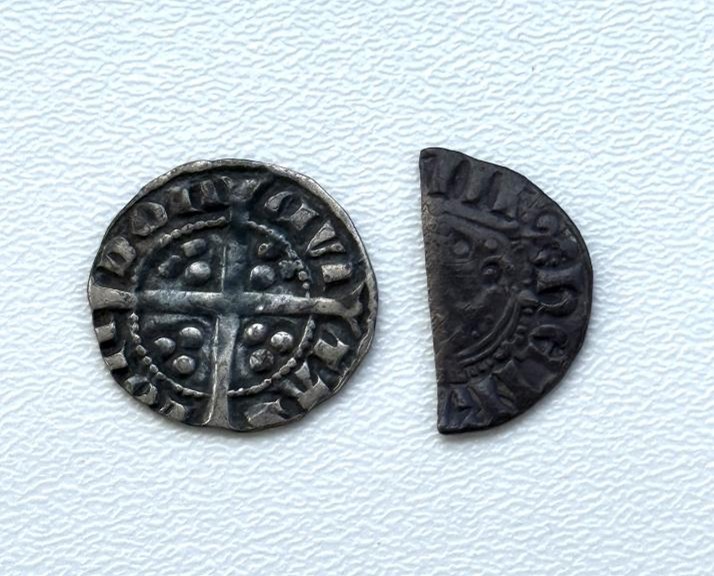
He shows us some coins that are cut in half along the cross which Paul says was done to give people change at a time before smaller currency like halfpennies were minted.
Paul also has coins from the English Civil War that have been clipped illegally, including half a crown and a rose farthing from the 1600s.
“The value of the coin was in the metal so people would pinch a bit of silver, remelt it and accumulate it for profit. If a coin was clipped, it wasn’t worth the full value of the coin, so shopkeepers used scales to check the weight.”
Clipping coins resulted in coins becoming unviable tender and was deemed treasonous. It led to coins with milled or reeded edges being minted by Isaac Newton when he was appointed warden of the Royal Mint.
Paul also has examples of emergency gun money made by the forces of the deposed James II. Short on money during the Williamite War in Ireland, brass cannon and church bells were melted down and struck into coins. They were worthless, but the intent was to replace them with silver once James regained his throne – which never happened.
Since WWII, ‘silver’ coins have been made from cupro-nickel, a copper and nickel alloy: silver coins were melted down to fund the war effort.
While some coins in Paul’s collection are ten a penny, others are relatively scarce including a sixpence from the short-lived rule of the last Stuart monarch, Queen Anne.
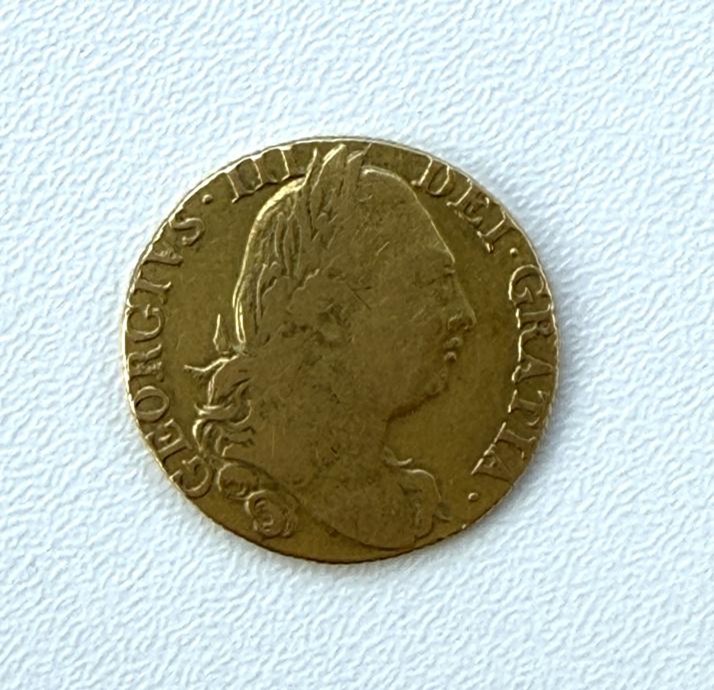
The most valuable is a guinea from Anne’s distant cousin George III – the only gold coin in Paul’s collection.
He also has a Cumberland Jack coin from the Victorian era, which is actually a fake coin – or a gaming piece – that was satirically made in honour of George III’s unpopular fifth son Ernest, Duke of Cumberland, who left for Hanover in 1837.
Those of you who know your history will recognise 1837 as the year Queen Victoria came to the throne. Ernest was her uncle and had been in line for the British throne owing to his older brothers having no legitimate sons. However, succession rules meant Victoria, daughter of his older brother Edward, became queen instead on the death of William IV.
William had also been ruler of the House of Hanover, but Salic rule meant women couldn’t take the throne. Ernest, who had allegations against him of murder, incest, assault and planning to kill Victoria, was unpopular with his family, peers and the public so the flags were firmly out when he departed for Germany.
Victoria, however, became the longest serving British monarch compared to her predecessors. Because of her long 63-year reign, Queen Victoria is the only monarch to have four effigies on coins.
Paul has examples of all four portraits: young Victoria with the bun head (1838-1887) the gothic crown (issued in 1847 and 1853), the jubilee head with a more mature queen (1887-1893) and the old head with her widow’s veil (1893-1901).
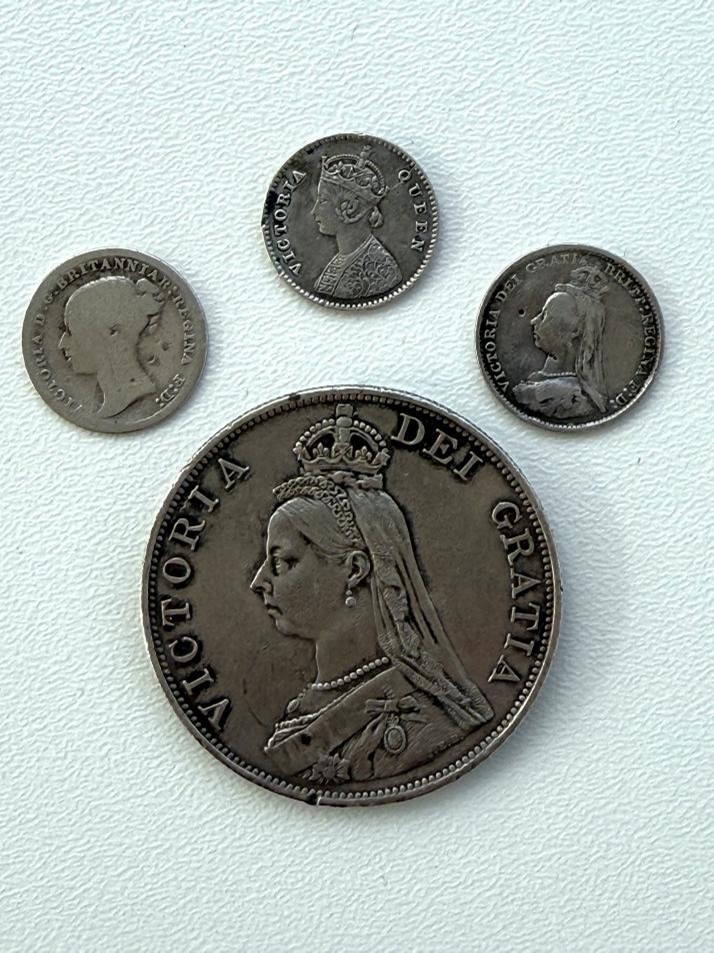
Monarchs’ heads have featured on coins for well over 2,000 years, with Julius Caeser the first to put his portrait on a coin. But did you know that they alternate between left and right facing profiles with each new monarch? The tradition started in the 1600s because Charles II wanted to ‘turn his back’ on Oliver Cromwell.
One of the more recent additions to his assembly of coins is a partially complete collection of £2 coins with commemorative designs minted between 1997 and 2016.
“That came about because I had one in my pocket and showed my granddaughter. We noticed the design and looked up the meaning behind it.”
As well as British sterling, Paul’s collection also includes foreign currency, mainly Cypriot coins that pre-dated the Euro. Paul and his wife Sue lived in Cyprus for a few years and his hobby followed him, too.
“I’d find lots of coins or gold rings just walking around the harbour or on the beach.”
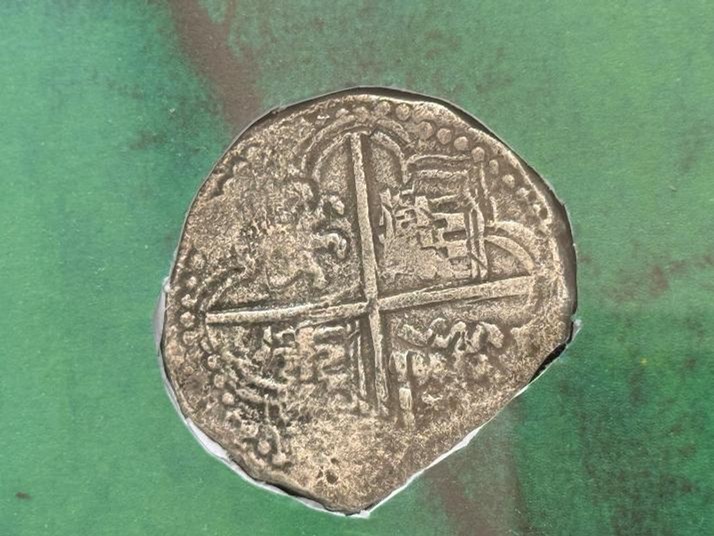
Perhaps the most unusual coin in his collection is a Spanish dollar, or eight reale, that was recovered from the Spanish shipwreck the Nuestra Señora de Atocha. In 1622, the treasure galleon sunk in a hurricane off Florida Keys. Tonnes of silver and gold were lost at sea, as well as 260 people on board.
The wreck was found in the 1980s by American treasure hunter, Mel Fisher, from whom Paul bought this piece of eight from while on holiday in Florida.
With the rise in contactless payments, physical cash usage is declining rapidly. There has been a surplus of coins in storage and a reduction in new minting of lower denomination coins over the last few years, so how will this affect the future of numismatics?
Coin collecting enthusiasts like Paul may see some changes to their hobby, though what those changes could look like is uncertain. But Paul advises people to hold onto their pennies.
“When we were kids, we all had pennies in our pocket that we’d use to buy sweets or play games with. Start with the change in your pocket and you could still uncover a piece of history or an interesting story.”